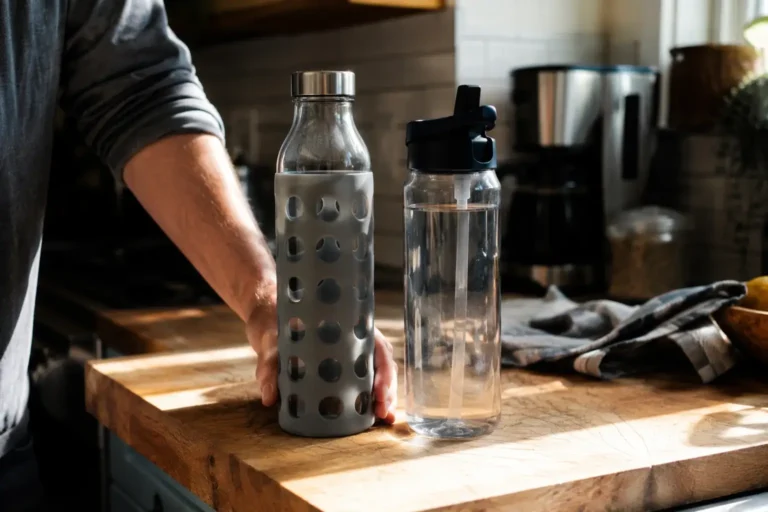
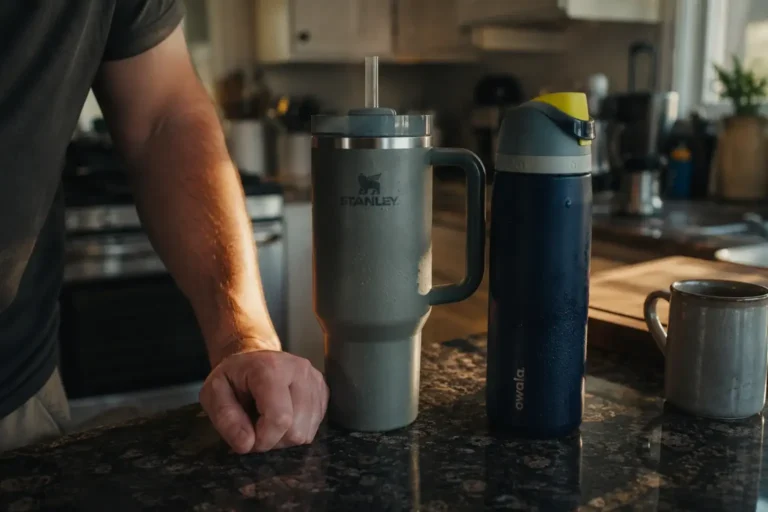
Owala vs Hydro Flask: Myth-Busting The Mold Issues
My sister Paige sent me a video about the Owala water bottle a few months ago. She loved the colors. She thought the built-in straw was neat. I took one look at the complicated lid and saw a biology experiment waiting to happen.
I am an accountant by day. I do not buy things because they look cool on the internet. I buy things because they work, they last, and they do not make me sick. I build spreadsheets to compare features before I spend my money. For the last three years, I have carried the same Hydro Flask. It has a big dent on the bottom from when I dropped it on a concrete parking garage floor. It wobbles when you set it down on a flat desk. But it holds water, and it does not leak.
When Paige bought her Owala, we started arguing about which bottle was actually better for daily life. When it comes to the Owala vs Hydro Flask debate, people usually talk about which one looks better or which one keeps ice frozen the longest. But if you read the one-star Amazon reviews like I do, you will find the real issue.
Mold.
People are finding black, slimy mold growing inside the lids of their expensive water bottles.
Today, we are going to look at both of these bottles. We will talk about how they work, how they break, and most importantly, how to keep them from turning into a fuzzy science project. I have zero formal culinary training, but I know how to read an instruction manual and I know how to spot a design flaw. Let us get into it.
Why We Keep Buying Expensive Water Bottles
It feels strange to spend forty dollars on a metal tube to hold tap water. My mom, Linda, used to reuse the same plastic cup from a fast-food restaurant until it cracked. She never worried about vacuum insulation.
But modern life is different. We work at desks. We commute in cars. We want our water to stay cold for twelve hours. We want bottles that do not sweat and ruin our laptops or leave rings on our wooden tables. Both Owala and Hydro Flask solve the sweating problem completely. They both use double-wall vacuum insulation. This means there are two layers of steel with an airless space between them. Heat and cold cannot easily cross that empty space.
But that is where the similarities end. These two companies have completely different ideas about how you should drink your water.
The Core Difference: Simplicity vs. Convenience
Both of these bottles do the exact same basic job. But they go about it in totally different ways. One is built like a tank. The other is built like a machine.
Hydro Flask: The Simple Tank
Hydro Flask became famous because the design is incredibly simple. The standard wide-mouth bottle has a very basic screw-on cap. There are no springs. There are no latches. There are no moving parts to break. You grab the flexible handle, twist the top off, and take a drink from a wide opening.
This simplicity is great for long-term durability. If you drop a Hydro Flask on its lid, it usually survives just fine. There is nothing sticking out to snap off.
But the simple design is annoying to use in a car. You have to use two hands to open it. If you are driving on the highway, unscrewing a wide-mouth cap, holding the cap in one hand, and trying not to spill ice water down your shirt with the other hand is a real problem. It is friction. And friction makes you drink less water.
Owala FreeSip: The Mechanical Marvel
Owala looked at the driving problem and fixed it. Their FreeSip lid is very clever. It has a button on the front. You press the button, and a spring-loaded cover pops open.
Inside, there is a plastic drinking spout with two holes. You can tilt the bottle back to chug water through the big hole. Or, you can suck water through the built-in straw using the smaller hole. You can do all of this with one hand. It is extremely convenient.
But convenience comes at a cost. The Owala lid has a button, a metal spring, a plastic latch, a silicone stopper, a rubber spout gasket, and a removable plastic straw. That is a lot of small parts packed into one lid.
The Mold Problem: Why It Happens to Both Bottles
Let us get straight to the ugly part. Mold loves dark, damp places. Your water bottle lid is exactly that.
Many people think that because they only put plain tap water in their bottle, it cannot get dirty. This is entirely false. Every time you take a sip, bacteria from your mouth get on the lid. Backwash happens. Small particles of food from your lunch end up on the spout. If you close the bottle and leave it sitting at room temperature, the moisture and the bacteria sit in the dark. That is exactly how mold starts.
I wanted to know why this happens so fast, so I did some reading. Following Penn State Extension’s advice on preventing kitchen mold, I learned that mold spores just need moisture and a tiny food source to thrive. The food source is often just the natural oils, saliva, and bacteria from your mouth.
Both the Owala and the Hydro Flask use silicone rubber gaskets to make a watertight seal. Silicone is great because it bends and stops water from leaking out of the threads. But mold loves to grip onto soft, porous rubber.
Cleaning the Owala FreeSip: Is It Actually a Nightmare?
The biggest myth about the Owala FreeSip bottle is that it is impossible to clean. It is not impossible. But it does take actual effort. You cannot just run it under the kitchen sink for three seconds and call it good.
If you just rinse the lid, you are going to get mold. The mold hides under the rubber spout gasket. You cannot see it when the lid is fully put together. You will just start noticing a weird, funky smell when you take a drink.
Here is exactly how you have to clean an Owala lid to keep it safe:
- Take it completely apart: Pull the plastic straw out of the bottom. Then, you have to dig your fingernail or a dull butter knife into the small groove and pull out the silicone spout gasket. (Do not use a sharp knife, or you will cut the rubber).
- Scrub the hidden spots: You need a tiny wire brush. A regular kitchen sponge will not fit. You have to scrub inside the hole where the straw connects. You have to scrub the rubber gasket itself to remove the slimy film.
- Let it dry fully: This is the part everyone skips. You cannot put it back together while it is wet. You have to leave the parts scattered on a towel overnight.
The Owala base and lid are technically top-rack dishwasher safe. But the dishwasher will not pull the gasket out for you. If you leave the gasket in place, the dishwasher heat just bakes the mold right into the rubber.
I like to make sure the materials are actually safe when things get this complex. I read through the FDA’s guidance on food-contact materials to make sure silicone can handle constant scrubbing without breaking down. It holds up well, but if you tear it by accident, you have to buy a whole new lid.
Cleaning the Hydro Flask: Do Not Get Complacent
Hydro Flask users love to make fun of Owala users for having complicated lids. But Hydro Flask owners are often just as guilty of drinking out of dirty bottles.
The standard wide-mouth Hydro Flask cap looks completely solid. But look inside the cap. There is a small rubber ring tucked deep inside the rim. That ring presses against the metal bottle to stop the water from leaking out the sides.
Most people never take this ring out. They just wash the cap with soap and water, thinking they did a good job. Water gets trapped under that ring. After a few months, black mold grows underneath it. I know this because it happened to me. I noticed black spots on my paper towel when I was wiping the cap one morning. I used a bent paperclip to pull the rubber ring out. It was completely black on the bottom. It was gross.
Here is the truth. The Hydro Flask is easier to clean than the Owala, but you still have to take the rubber seal out. If you do not have a small tool to pop the seal out, both of these bottles will get nasty. I treat my kitchen tools with respect. I follow the official Lodge Cast Iron care guide for my favorite skillet to prevent rust, and expensive water bottles need that same level of deliberate care. You cannot just ignore them.
Ice Retention and Temperature Control
I like numbers. I like things that can be measured on a spreadsheet. So let us talk about insulation performance.
As I mentioned earlier, both brands use double-wall vacuum insulation. According to Wikipedia’s breakdown of stainless steel grades, both companies use 18/8 food-grade stainless steel. This means they are made of the exact same type of metal.
In my own tests in my apartment, I filled both bottles with ice and tap water at 8:00 AM. I left them sitting on my kitchen counter. The room was about 72 degrees. At 8:00 PM, both bottles still had a lot of ice inside. The next morning, 24 hours later, both bottles were still very cold, though the ice had mostly melted in both.
The insulation battle is basically a tie. You will not notice a difference in real life. If you want to get nerdy about it, you can look at how Consumer Reports tests insulated bottles for temperature retention across different brands. They usually find that the lid design matters slightly more than the steel walls, because plastic lids let heat in faster than metal walls do. But for everyday use, both Owala and Hydro Flask will keep your water cold all day long.
The Drop Test and Everyday Durability
Durability is a different story entirely.
I drop my things. I am not careful. The steel bodies of both bottles will dent if you drop them on concrete. The powder-coated paint might chip. That is totally normal for any metal bottle.
The weak point is always the lid.
The Hydro Flask flex cap has a flexible rubber strap. It is very hard to break. You can swing it around by the strap, drop it on a rock, or toss it in a gym bag, and it usually survives without any issues.
The Owala FreeSip lid is made of rigid plastic. It has a spring-loaded button and a hard plastic carry handle that locks it shut. If you drop the Owala directly on its lid on a hard floor, that plastic latch can snap. If the latch breaks, the lid will not stay closed. The spring will just keep it popped open. It is a much more fragile design. You have to be a little more careful with it.
The Straw Debate: Do You Actually Need One?
Before I tested the Owala, I did not understand the appeal of a built-in straw. I grew up drinking out of normal cups and normal wide-mouth bottles.
But I have to admit, the straw makes you drink more water. When you do not have to tilt your head back, you just drink more without thinking about it. Paige was right about this. If you are sitting at a desk looking at spreadsheets, sipping from a straw is just easier.
The downside is that straws are awful to clean. You have to buy a special long wire brush. And if you put anything other than water in the bottle, the plastic straw will hold onto the flavor forever. Do not ever put iced coffee or juice in a bottle with a plastic straw. You will never get the taste out.
If you put a sugary drink in there, you are asking for trouble. I always point to the USDA’s guidelines on safe food handling which explain that bacteria multiply rapidly in sugary environments at room temperature. Water only. That is my strict rule for bottles with straws.
Sizing, Weight, and Cup Holder Compatibility
When you are buying a water bottle, the size matters a lot more than you think.
Hydro Flask offers a huge range of sizes. Their 21-ounce standard mouth and 24-ounce wide mouth fit perfectly into almost any car cup holder. But if you buy the popular 32-ounce or 40-ounce sizes, they are too wide. They will end up rolling around on your passenger seat. A full 40-ounce Hydro Flask weighs over three pounds. It is heavy.
Owala FreeSip comes in 19, 24, 32, and 40-ounce sizes. The 24-ounce Owala fits nicely in a cup holder. The 32-ounce has a slightly tapered base, but it is still a tight squeeze in many smaller cars.
Because the Owala lid is taller and has more plastic parts, the Owala is actually slightly taller and top-heavy compared to a Hydro Flask of the same volume. This makes it a little easier to knock over on a desk.
Cost vs Value: Are They Worth The Money?
Let us put my accounting brain to work.
A 32-ounce Hydro Flask usually costs around $45. A 32-ounce Owala FreeSip usually costs around $38.
The Owala is slightly cheaper upfront. But you have to factor in the maintenance cost. To keep the Owala clean, you really need a set of small bottle brushes. If you lose or tear the small rubber gasket, you have to buy a replacement from Owala. If you drop the lid and snap the plastic latch, you have to buy a replacement lid for about $15.
The Hydro Flask costs more upfront, but it requires less maintenance gear. A standard kitchen bottle brush is usually enough, along with a paperclip to pop the seal out. You are very unlikely to break the cap from dropping it.
Over a three-year period, the total cost of ownership is basically exactly the same. Do not let a $7 price difference make the decision for you.
Owala vs Hydro Flask Comparison Table
I build comparison spreadsheets before I buy anything. Here is the simplified version of my notes on these two bottles.
| Feature | Owala FreeSip | Hydro Flask Wide Mouth |
| Lid Style | Push-button, built-in straw and chug port | Screw-off cap with flexible rubber handle |
| Material | 18/8 Stainless Steel | 18/8 Stainless Steel |
| Ease of Use | One-handed. Very easy for driving and desk work. | Two-handed. Hard to use while driving. |
| Cleaning Difficulty | High. Many moving parts. Hidden rubber gaskets. | Low to Medium. Only one hidden rubber ring. |
| Durability | Rigid plastic lid can break if dropped hard. | Very tough. Hard to break the flexible lid. |
| Mold Risk | High if not taken apart regularly. | Moderate. Must remove the inner ring. |
| Cup Holder Fit | 24oz fits. larger sizes usually do not. | 21oz/24oz fits. 32oz/40oz do not fit. |
The Verdict: Which One Should You Buy?
This comes down to knowing yourself. Be honest about your daily habits.
If you are a lazy cleaner, buy the Hydro Flask.
If you know you are never going to take your stuff apart to wash it, the Owala will turn into a mold farm within a month. The Hydro Flask is much more forgiving. You still have to clean it, but it has fewer hiding spots. It is a tank. It will last for years even if you treat it badly and drop it on the sidewalk.
If you want to drink more water and you are willing to clean it properly, buy the Owala.
The FreeSip lid is genuinely a great design. Being able to sip upright or chug when you are thirsty is really nice. But you have to treat it like a machine. You have to buy the small bottle brushes. You have to pull the rubber pieces out every single week. If you commit to that, it is probably the better daily bottle for a desk job or a long commute.
I keep my dented Hydro Flask for hiking, going to the park, and throwing in the back of my car. I use the Owala when I am sitting at my desk working on spreadsheets. Paige uses her Owala everywhere, but she actually cleans it every week, so it works perfectly for her.
FAQ
1. Can I put my Owala or Hydro Flask in the dishwasher?
Technically, both brands say their stainless steel bottles are dishwasher safe. However, I strongly suggest hand washing the metal bodies. Dishwasher detergent is highly abrasive. Over time, it will slowly ruin the powder-coated paint on the outside of the bottle and make it look dull. For the lids, putting them on the top rack is fine, but it does not replace deep cleaning. A dishwasher will not remove the mold trapped under the rubber gaskets. You still have to take the gaskets out by hand before you put the lid in the machine.
2. How do I get rid of the mold smell in my water bottle lid?
If your bottle already has a funky smell, dish soap is not enough. You need white vinegar or baking soda. Take the lid completely apart. Remove all rubber gaskets and the straw. Soak the parts in a bowl filled with half warm water and half white vinegar for 15 to 20 minutes. Scrub them with a small brush, rinse them well, and let them dry completely in the open air. The bad smell is caused by bacteria, and the acid in the vinegar kills the bacteria.
3. Does the Owala leak when it is rolling around in a backpack?
No, the Owala FreeSip does not leak, as long as it is closed properly. The push-button lid has a built-in locking loop that doubles as the carry handle. When you flip that loop up over the button, the lid cannot pop open by accident. But if you forget to flip the lock up and something in your bag bumps the button, the lid will pop wide open and soak your stuff. You just have to remember to use the lock every single time.
4. Why does my ice melt so fast in my insulated bottle now?
If your double-wall insulated bottle suddenly stops holding ice, the vacuum seal is broken. This usually happens if you drop the bottle hard enough to dent the outer wall so deeply that it touches the inner wall. It can also happen if the bottom seal of the bottle fails from extreme heat. Once the vacuum is gone, the bottle is just a regular metal cup. You cannot fix a broken vacuum seal. You have to check your warranty or buy a new bottle.
5. Can I put hot coffee in an Owala FreeSip?
No. Owala specifically says not to use the FreeSip bottle for hot liquids. Because it has a built-in straw and a completely sealed lid, the steam from hot coffee builds up intense pressure inside the bottle. When you press the button to open it, the pressure forces the hot liquid to shoot out of the straw and it can easily burn you. If you want to carry coffee, buy a dedicated travel mug with a simple slider lid, not a straw lid.
6. Are there safe alternatives to the silicone gaskets if I am allergic or hate cleaning them?
Not really. Almost every major insulated water bottle brand uses silicone rings to create a watertight seal against the metal or hard plastic. Without the soft rubber to fill the gaps, the bottle will leak everywhere. The only leak-proof bottles without silicone are usually old-school glass bottles with metal twist caps, but those break easily and do not keep water cold at all.
7. Do Hydro Flask bottles still dent easily?
Yes. Hydro Flask bottles are made of fairly thin stainless steel to keep the weight down. If you drop a full 32-ounce bottle on a hard surface, the weight of the water inside will cause the steel to dent upon impact. A dented bottle still works fine as long as the vacuum seal is intact. If you hate dents, you can buy a silicone boot that slides over the bottom of the bottle to act as a shock absorber.
8. How often should I actually be washing my water bottle?
You should rinse it with hot water and dish soap every single day. You should do a deep clean—taking the gaskets out and scrubbing the hidden spots—at least once a week. If you leave water sitting in it over the weekend while you are away, dump it out and wash it before you use it again. Standing water at room temperature is exactly what mold needs to start growing.