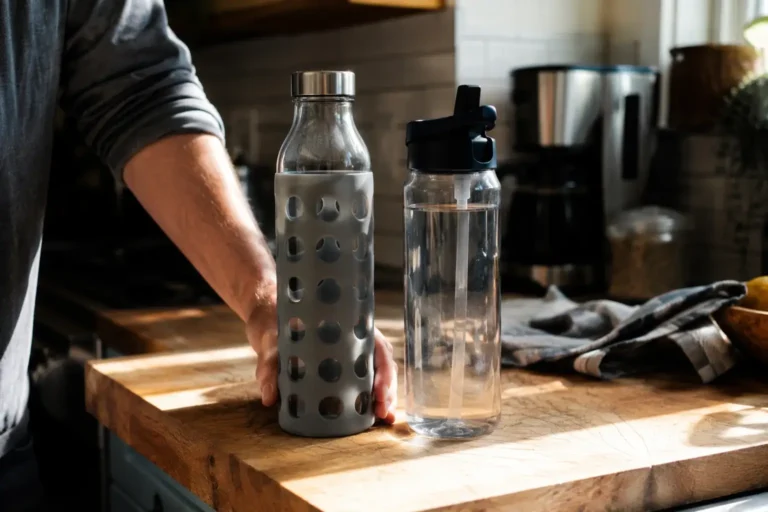
Stanley vs Owala: Which Tumbler Actually Leaks?
People spend forty dollars on a metal cup. I did not understand this at first. I work a desk job. I look at spreadsheets. I want to see value in the things I buy. My sister, Paige, loves how things look. She showed me pictures of these bright, giant cups on Pinterest. She asked me which one is better.
I did not know. So I looked into it. The big fight right now is Stanley vs Owala. Everyone talks about them. But they mostly talk about the colors. I do not care about the colors. I care if the cup works. My main question was simple. Which one is going to spill water all over my car seat?
When I grew up, my mom just used regular glass cups from the cabinet. We did not have forty-dollar metal cups. But now, we take water everywhere. We take it to the gym. We take it to work. If you put a cup in a bag, it has to stay sealed.
I spent a lot of time looking at these two cups. I read the good reviews. I read the bad reviews. I looked at how the lids are made. This is what I found.
The Real Issue: Why Do Water Bottles Leak?
Before we pick a winner, we need to know why cups leak in the first place. It is just simple physics. Water wants to get out. When you tip a cup over, gravity pulls the water down. If there is a hole, the water finds it.
A good water bottle needs a tight seal. Most metal cups use a small rubber ring. This ring squishes down when you close the lid. It blocks the water. But not all lids are the same. Some lids have holes for a straw. A straw is just an open pipe. If a cup has an open pipe, the water will run right out of it.
You also have to think about pressure. If you put very cold water in a cup, and then take it out into the hot sun, the air inside gets warm. Warm air expands. It pushes on the water. If the lid is not built right, that pressure will push water right out the top.
I like to understand exactly how things work. So, I spent an hour reading how Wikipedia explains the basic science of a vacuum flask to see how these metal walls actually trap the cold. It turns out, keeping the water cold is the easy part. Both of these brands do a great job at that. The hard part is the lid. The lid is where the cup either wins or fails.
The Stanley Quencher: Big, Heavy, and Open
The Stanley Quencher is huge. It has a giant handle. It holds a lot of water. But let us get right to the point. The Stanley leaks.
It is not a secret. If you knock a Stanley over, water will spill out. Why? Because of the lid. Stanley calls it the FlowState lid. It is a piece of plastic that spins. You can spin it to cover the hole. You can spin it to show a small sip hole. Or you can spin it to hold a thick plastic straw.
Most people use the straw. When the straw is in the cup, there is no seal around it. There is just an open gap. If your dog bumps the table and the cup falls, water pours out of that gap. It runs all over the table. It runs all over your floor. I read hundreds of one-star reviews. People are very mad. They put the cup on their car seat. It tipped over. It ruined their seats.
This is a failure mode. I always look for failure modes. The Stanley fails when it is not standing straight up.
But the Stanley is not all bad. It has some really good points. First, it is very easy to hold. The big handle is nice. Second, it holds hot coffee. The plastic lid can take the heat. Third, it tapers at the bottom. This means a giant cup can still fit into a normal car cup holder.
When I look at gear, I want to know if tests are real. I often check how Consumer Reports sets up strict testing methods for travel mugs to learn how to test things the right way. Their tests show that if you keep a cup upright, it works fine. So, if you only use your cup at a desk, the Stanley is okay. But if you drop things a lot, it is a bad choice.
The Owala FreeSip: The True Tight Seal
Now let us look at the Owala. This cup is built different. It does not have a giant handle on the side. It does not have a straw sticking out of the top. Instead, the straw is hidden inside.
The Owala uses a push-button lid. When you push the button, the top pops open on a spring. Inside, you see a very smart design. There is one opening, but it does two things. You can suck on the bottom part of the hole like a straw. Or, you can tip the cup back and chug water through the top part of the hole.
This is why they call it the FreeSip. You do not have to choose between a straw cup and a chug cup. It does both.
But the best part is what happens when you close it. You push the plastic cap down until it clicks. Under that cap is a small piece of rubber. It is a silicone pad. When the lid clicks shut, that rubber pad presses hard against the drink hole. It seals it tight.
When I saw this rubber piece, I wanted to be sure it was safe. I read the FDA rules on safe food-contact materials and silicone to make sure it will not break down into my drink over time. It is totally safe. And it works perfectly.
If you close the Owala and turn it upside down, it does not leak. You can shake it. You can drop it in a backpack. The water stays inside. It has a little metal loop that folds down over the button. This is a lock. It stops the button from getting pushed while it is in your bag.
For a normal person who walks around, the Owala wins the leak test easily. It is not even close.
The Car Commute Test
In Findlay, I drive to my desk job. I use my car a lot. A cup has to fit in my car. This is where the fight gets close again.
The Stanley Quencher was built for cars. The bottom of the cup is narrow. Even the giant forty-ounce cup fits into my basic car cup holder. It sits there perfectly. When I drive, the handle points out. I can grab it without looking. I can take a sip from the straw while keeping my eyes on the road.
The Owala is different. The large Owala cups are fat. They do not taper at the bottom. If you buy the 32-ounce or 40-ounce Owala, it will not fit in a normal car cup holder. It just sits on the seat next to you. If you hit the brakes, the Owala rolls onto the floor. It does not leak when it rolls, but it is annoying to pick up.
If you want an Owala that fits in a cup holder, you have to buy the smaller 24-ounce size. But then you have less water. So you have to decide what matters more to you. Do you want more water? Or do you want it to fit in the car?
The Hidden Gross Part: How to Clean Them
I do not care how nice a cup looks on the outside. I care about what grows on the inside. If a cup is hard to clean, you will get lazy. If you get lazy, mold grows. It is a fact.
The Stanley is very easy to clean. The company says the whole thing is dishwasher safe. The lid comes apart into three big pieces. The straw pulls right out. You can throw it all in the top rack of the dishwasher. It gets clean. There are no tiny hiding spots for germs. If you put it in the dishwasher, you are fine.
The Owala is much harder to clean. This is its biggest flaw. The cup part needs to be washed by hand. The lid can go in the dishwasher, but it is tricky. Remember that great silicone rubber pad that stops the leaks? That pad can trap dirty water.
I read a lot of bad reviews for the Owala. Almost all of them talk about mold. People pull out that little rubber pad and find black slime behind it. If you do not take the pad out and wash it, bacteria will grow. Mold loves dark, wet spaces.
To keep my kitchen safe, I always refer back to facts. The Penn State Extension has clear guides on how fast bacteria grows in damp kitchen tools if they do not dry all the way. It happens faster than you think. You have to take the rubber piece out of the Owala lid every single week. You have to scrub it. You have to let it dry in the air.
If you want to read more about keeping things clean, the USDA posts guidelines on safe food handling and washing that explain why hot soapy water is so important. If you are a lazy cleaner, the Owala might get gross. You have to be honest with yourself about how much you like to wash dishes.
What About Hot Drinks?
Sometimes people ask me if they can put hot coffee in these cups. This is an easy answer.
The Stanley can handle hot drinks. The lid is open. The pressure from hot steam can escape. It will keep coffee hot for hours.
The Owala FreeSip cannot handle hot drinks. Do not do it. The Owala seals perfectly tight. If you put hot coffee in it and snap the lid shut, the steam builds up pressure. When you push the button to open it, hot coffee will shoot out of the straw like a geyser. It will burn your face. The company even says this on their website. The FreeSip is for cold drinks only.
If you really want an Owala for hot drinks, they make a different cup called the SmoothSip. But the normal FreeSip is just for cold water.
Which Cup Should You Actually Buy?
Let us make this simple. I do not do fancy lifestyle points. I just look at the facts.
Buy the Stanley Quencher if:
- You sit at a desk all day.
- You drive a lot and need a giant cup that fits in your cup holder.
- You want to drink hot coffee sometimes.
- You are too lazy to hand wash tiny rubber pieces.
Buy the Owala FreeSip if:
- You walk around a lot.
- You carry a backpack or a gym bag.
- You knock things over often.
- You want a cup that absolutely will not leak.
- You only drink cold water.
For me, the Owala wins. I drop things. I want to throw my cup in the passenger seat and not worry about it. I do not mind taking two extra minutes a week to wash the little rubber pad. It is a fair trade for a dry car seat. Paige still likes the Stanley because it matches her car. But that is Paige.
Frequently Asked Questions
Why does my Stanley leak from the top?
Your Stanley leaks because the FlowState lid is not perfectly sealed. The hole where the straw goes does not have a tight rubber ring around the straw. Even if you take the straw out and spin the plastic cover to close the hole, the plastic parts do not form a water-tight bond. If you tip the cup on its side, water will find the gaps in the plastic and drip out.
How do I clean the rubber gasket in the Owala?
You need to do this at least once a week. Open the lid. Look inside the top cap. You will see a piece of soft rubber. Pinch it and pull it out. Wash it in the sink with warm water and dish soap. Wash the plastic lid too. Then, leave both pieces out on a towel to dry completely. Do not put the rubber back in until it is totally dry. If you trap water behind it, mold will grow.
Can I put hot coffee in an Owala FreeSip?
No. Do not put hot liquids in the Owala FreeSip. The lid creates an air-tight seal. Hot liquids make steam. Steam creates high pressure inside the sealed cup. If you put hot coffee in it, the pressure will build up. When you press the button to open the lid, the hot coffee will spray out of the straw and might burn you. Only use it for cold drinks.
Are both cups actually BPA free?
Yes. Both the Stanley Quencher and the Owala FreeSip are completely BPA free. They use food-grade stainless steel for the cup parts. The plastic lids and straws are made from safe, heavy-duty plastics that do not have BPA. You do not have to worry about weird chemicals leaking into your cold water.
Does the Owala fit in a standard car cup holder?
It depends on what size you buy. The 24-ounce Owala FreeSip will fit in a normal car cup holder. The bigger sizes, like the 32-ounce and the 40-ounce, are too wide at the bottom. They will not fit. The Stanley Quencher is shaped differently. Even the giant 40-ounce Stanley has a skinny bottom, so it fits in almost all car cup holders.
Which cup keeps ice cold the longest?
Both cups are very good at keeping ice frozen. They both use double-wall vacuum insulation. This means there is an empty space between the inside metal wall and the outside metal wall. Heat has a hard time crossing that empty space. In normal daily use, both cups will keep ice solid for over a day. You will probably drink the water long before the ice melts in either cup.