Silicone vs Metal Bakeware: A Realistic Breakdown
I get the appeal of silicone. You see those bright, wiggly molds online, and they look like the answer to every baker’s prayer. They promise “non-stick” magic, they’re squishy enough to stuff into a drawer, and they don’t rust. My sister Paige is always sending me links to them. “Derek,” she’ll say, “look how easy this is to pop out!”
And yeah, they are easy. But after spending three years researching kitchen gear and ruining my fair share of baked goods in my own cramped apartment, I’ve learned that “easy” and “actually works” are two different things.
When you’re looking at silicone vs metal bakeware, you aren’t just choosing a color. You’re choosing how heat moves into your food.
The Physics of Why Your Cake Sinks
Here is the accounting brain kicking in: I don’t care about the marketing photos. I care about heat transfer.
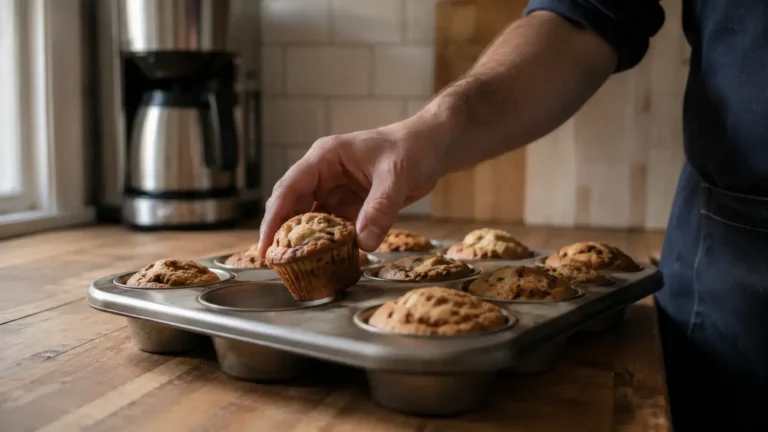
Metal is a conductor. It grabs the heat from your oven and shoves it straight into your batter. This is why a standard aluminum pan gives you that crisp edge on a brownie or a nice rise on a muffin. The heat hits the batter, the leavening agents fire off, and the cake sets before it collapses.
Silicone is an insulator. It’s like wearing a winter coat while trying to bake. It holds the heat back. Because it doesn’t transfer heat efficiently, your food takes longer to bake. If you’re making something that needs a firm structure, like a loaf of bread or a dense cake, the center might stay liquid for way too long while the edges eventually catch up.
When I started cooking, I didn’t think this mattered. Then I tried baking cornbread in a silicone tray. It came out looking like a pale, sad sponge. It tasted fine, but the texture was totally wrong because the bottom didn’t get that quick, hot hit of energy it needed to crisp up. If you want to know more about the basics of heat transfer in your kitchen, Wikipedia’s entry on thermal conduction explains the math behind how materials move energy. It’s not light reading, but it’s the honest truth of why your oven doesn’t always perform the way you expect.
What “Non-Stick” Really Costs You
The big selling point for silicone is that nothing sticks to it. And for the most part, that’s true. You don’t need to grease the pan nearly as much.
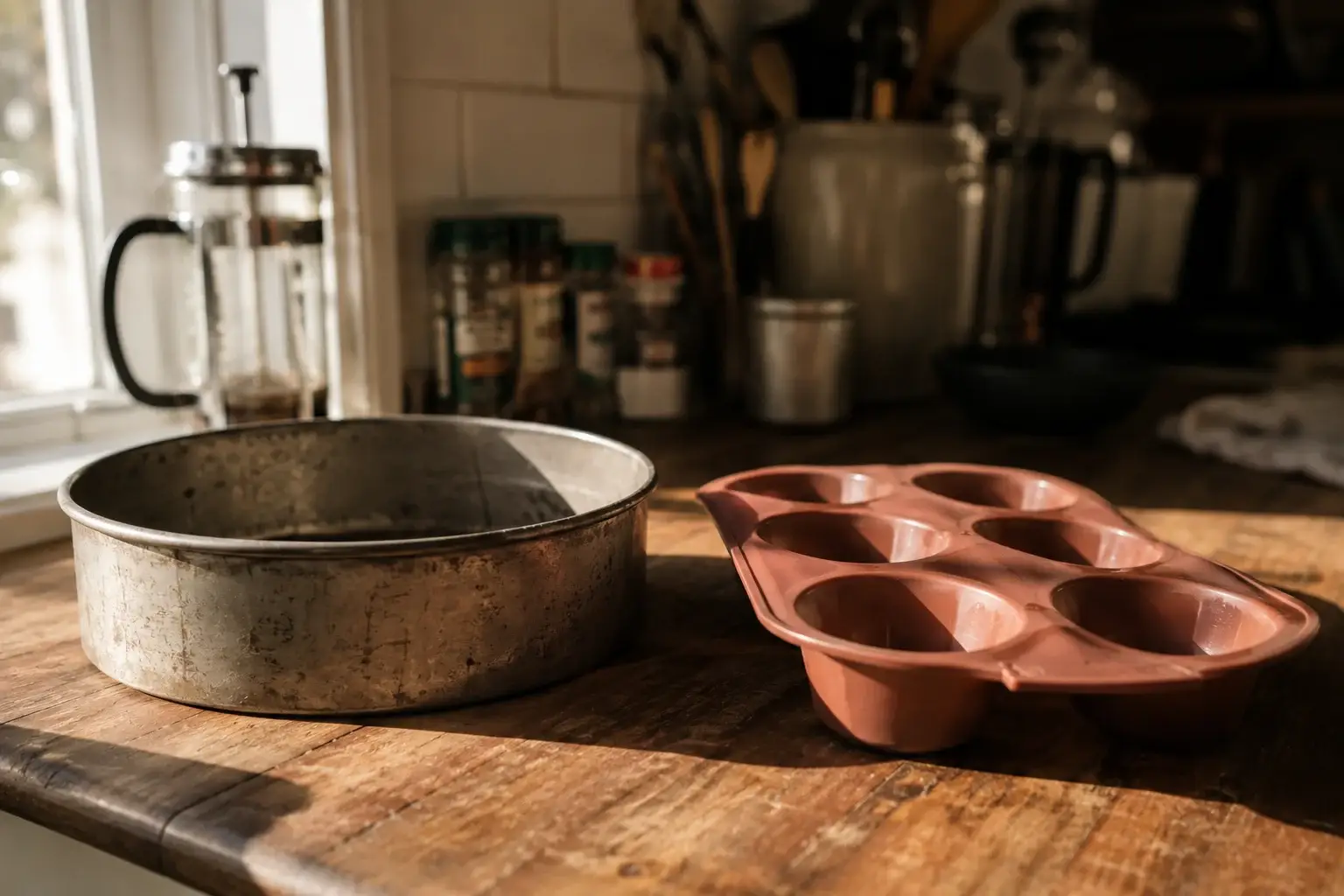
But there’s a trade-off. Metal pans, especially the good ones, are rigid. You can put them on a rack and they stay flat. If you fill a silicone muffin tray, it’s going to wobble like a bowl of jelly as you try to get it into the oven. You almost always have to put the silicone mold on a second metal baking sheet just to keep it steady. At that point, you’ve added an extra step and an extra pan to wash.
Also, be careful about the “food-grade” label. Not all silicone is made the same way. The FDA provides guidance on what makes a material safe for food contact, and it’s a good idea to ensure whatever you buy has clear compliance labeling. Cheap, budget-priced silicone can sometimes contain fillers that smell like burning chemicals the second they get hot. If you can smell your pan while it’s in the oven, you should probably stop using it.
The Durability Test
I’m a guy who reads the one-star reviews first. If you look at the complaints for silicone, they’re almost always the same: they stain, they hold onto soapy smells, or they get micro-tears from a knife.
Metal is predictable. If I drop my stainless steel saucepan, it might dent, but it still works. If I accidentally nick my silicone mold with a pairing knife, that tear will grow every single time I put it in the heat.
- Metal: Good for the long haul. Needs to be washed by hand, maybe a bit of elbow grease if things get stuck, but it’s a tool that lasts decades.
- Silicone: Great for specific, small-batch things like gelatin molds or ice cubes. But for your main baking? It’s usually a temporary fix for a problem (like sticking) that a good seasoning or a piece of parchment paper could solve anyway.
Comparison: Metal vs. Silicone
| Feature | Metal Bakeware | Silicone Bakeware |
| Heat Transfer | Fast (Conductor) | Slow (Insulator) |
| Durability | High (Dents, but doesn’t tear) | Moderate (Prone to tears/stains) |
| Release | Requires greasing/parchment | Naturally non-stick |
| Handling | Rigid and stable | Floppy, needs support |
| Best For | Cakes, brownies, bread, cookies | Chilled desserts, ice, molds |
If you decide you really need a better metal pan, don’t go for the “professional” grade stuff that costs a week’s pay. Look for heavy-gauge aluminum. Consumer Reports explains the basics of how different cookware materials perform, which helps when you’re trying to separate the marketing hype from the actual utility of the metal.
When to Actually Use Silicone
I’m not saying throw your silicone away. I have a silicone ice cube tray that I love, and some muffin liners that are great for things like egg bites or frozen treats. If the food doesn’t need to brown—if it’s just setting up in the fridge or freezer—silicone is perfect.
But if you are baking a cake? Get a metal pan. If you want a crust on your bread? Use metal. If you want your brownies to have those sharp, chewy edges instead of just… edge-less mounds? Use metal.
My mom used one beat-up metal pan for everything, and she never had a problem because she knew how it worked. She didn’t need fancy, flexible, space-age materials. She just needed heat to get where it was going.
FAQ
1. Why does my silicone bakeware smell after I use it?
If your silicone smells like chemicals, it’s likely made with low-quality fillers that are breaking down in the heat. High-quality, platinum-cured silicone shouldn’t have a strong odor. If it smells like soap, the material is likely porous and is absorbing the scent of your dish detergent, which is a common failure mode for cheaper products.
2. Is it true that silicone bakeware can leach chemicals into food?
There’s research suggesting that certain siloxanes can migrate into food, especially in low-quality products. The FDA regulates food-contact substances to ensure they meet safety standards, so look for items that specifically mention compliance with FDA or international standards like LFGB. It’s always safer to choose a reputable brand over a random listing.
3. Can I use metal utensils on silicone?
Absolutely not. Even a small scratch on a silicone surface is a permanent weakness. Once the surface is compromised, it will hold onto bacteria and food residue much more easily. If you must use silicone, use wood or plastic tools. The USDA has plenty of resources on safe food handling and preventing cross-contamination in the kitchen, which includes keeping your gear in good repair.
4. Why do my cakes bake faster in metal than in silicone?
It comes down to thermal conductivity. Metal is a fantastic conductor—it moves heat from the oven wall through the pan and into the batter quickly. Silicone is an insulator; it resists that flow of heat. Your oven is fighting the pan to get the center of the cake hot, which is why your edges often overcook before the middle is done.