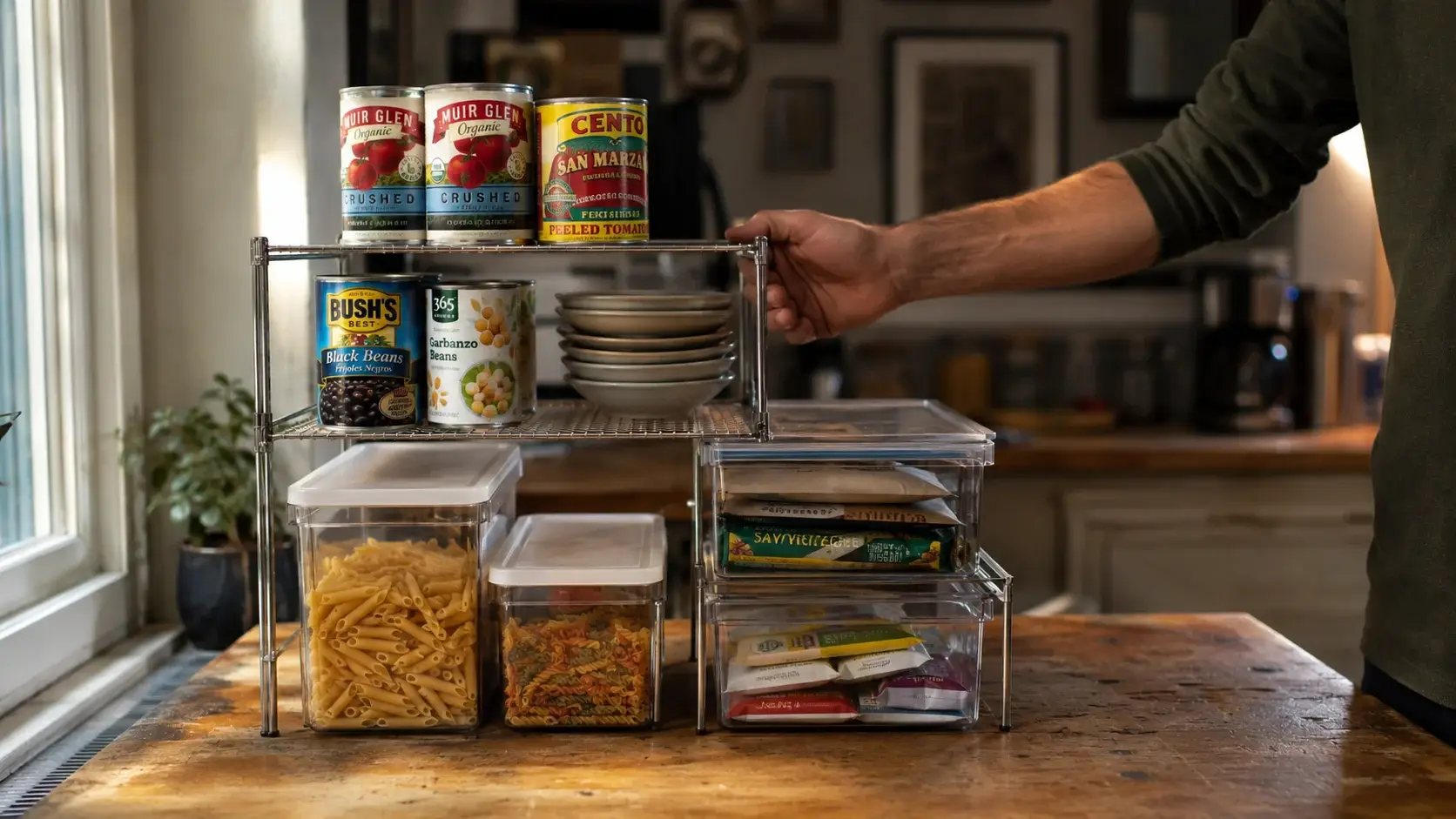
Stop Stacking: Shelf Risers vs Stackable Bins
I spent my twenties in apartments where the kitchen cabinets felt like a game of Jenga. You pull out a box of pasta, and the whole shelf shifts, sending a can of beans rolling into the abyss behind the mixer. My mom, Linda, never had this problem, but she also had a farmhouse kitchen with twice the shelf space I’ll ever own.
I’m an accountant by trade. I don’t buy gear because it looks pretty in a photo on Instagram. I buy it because it solves a problem without creating three new ones. Lately, everyone is obsessed with organizing. They want clear plastic bins, labels, and riser shelves that double their space. But if you have ever tried to shove a wide box into a narrow plastic bin, you know the reality is often less “Pinterest” and more “frustration.”
When we talk about stackable bins vs shelf risers, we aren’t just talking about plastic versus wire. We are talking about how you actually use your kitchen. Do you want to see everything at once, or do you want to group things together? My sister, Paige, loves the look of bins. She says they keep the chaos contained. I prefer risers because I don’t want to move three containers just to grab a bottle of olive oil.
The Case Against the “Stackable” Lie
When companies sell stackable bins, they promise you a vertical heaven. They show pictures of perfectly uniform labels and snacks. But here is the accountant in me coming out: these bins often have thick, rounded walls. You lose interior space because of the way the plastic is molded.
If you put a square item into a bin with rounded edges, you have wasted air. Plus, most stackable bins rely on you creating a tower. If the item you need is on the bottom, you have to lift the top bin, set it on your counter, grab the item, and then put the top bin back. That is a lot of extra work for a jar of spices.
If you look at the basic chemistry of polymers used in food-safe storage, you’ll see that not all plastics are made to last. Cheap, brittle bins crack under the weight of canned goods. Before you commit to a brand, check the NSF certification standards to ensure the materials are actually safe for your pantry items.
Why Shelf Risers Are My Default Choice
A shelf riser is just a metal or plastic bridge. It creates a second level in your cabinet. Unlike a bin, there are no walls. You can see everything. If you have a shelf that is tall but narrow, a riser lets you use the top half of that wasted air.
I keep a cheap wire riser in my main cupboard for my extra mugs and small bowls. Because it has no sides, I don’t have to “unload” the cabinet to get to the back. It’s an open system. If you buy a metal riser, make sure it meets the safety standards for food-contact surfaces, especially if you plan to store open bags of sugar or flour underneath.
Most people fail with risers because they buy the cheapest, wiggly ones. If the legs aren’t stable, your stack of plates is going to take a dive. I look for welded joints, not plastic clips.
Comparison: When to Use What
| Feature | Stackable Bins | Shelf Risers |
| Visibility | Low (only the front) | High (everything) |
| Effort | High (must unstack) | Low (grab and go) |
| Best For | Small, loose snacks | Cans, plates, bottles |
| Stability | Needs flat surface | Needs sturdy legs |
If you are struggling with a “canned goods avalanche,” you need a riser. If you are struggling with “tiny packets of sauce,” you need a bin. Stop trying to make one tool do both.
The “One-Star Review” Filter
I always read the one-star reviews first. When you look at stackable bins, the one-star reviews are always about the bins being smaller than the dimensions listed or cracking when stacked too high.
When you look at shelf risers, the one-star reviews are about the metal rusting or the legs collapsing. Both products have failure modes. Don’t buy a bin that is “universal” because universal usually means “fits nothing well.”
Managing Your Food Storage Safely
Whether you choose bins or risers, the goal is to keep things dry and cool. If you are using bins for bulk storage, follow the USDA guidelines for dry food storage to make sure you aren’t creating a moisture trap. Plastic bins can sweat if you store them in a cabinet near the stove or a dishwasher.
If you decide to use bins, don’t just dump items in. Keep the original packaging if you can. It has the expiration date on it. I’ve ruined enough rice to know that guessing when you bought a bag is a losing game. Learn how to store dry goods to prevent pests and maintain quality, as even the best organized shelf is useless if the food inside is stale or compromised.
Frequently Asked Questions
Are stackable bins worth the money if I have a small kitchen?
Only if you have very specific items that are hard to stack. If you have bags of snacks that fall over, a bin helps. If you have cans or jars, the bin actually wastes space because of the thick walls. Skip the bins for cans.
Do shelf risers scratch my cabinet shelves?
Some do. I put a small piece of felt or a silicone pad under the feet of my metal risers. It’s an extra step, but it saves your cabinet finish from getting ugly scratches that you’ll have to stare at every time you make coffee.
Can I put a shelf riser inside a stackable bin?
No. That is just adding “stuff” to your kitchen. You are trying to organize, not build a puzzle. If you need that level of complexity, your cabinet is too crowded, and you probably need to get rid of some gear instead of buying more.
Which is better for heavy items like cast iron?
Neither. Cast iron is heavy. If you put a heavy skillet on a cheap wire riser, it will bend. If you put it in a thin plastic bin, the bottom will crack. Keep your heavy cast iron on the base of your cabinet. Follow these care guidelines from Lodge for storing your heavy cookware properly.
How do I know if a riser will fit my cabinet?
Measure. And not just the width. Measure the height between shelves. If your riser is 8 inches tall and your shelf spacing is 7 inches, you have a problem. Use a tape measure, not your eyes.
Should I buy clear or opaque bins?
Clear. Always. If you can’t see what is inside, you will forget it is there. I have three “mystery” containers in my pantry right now, and I’m pretty sure one of them is flour from 2024. Clear bins force you to be honest about what you have.
Are bamboo risers better than wire ones?
Bamboo looks nice, but it is heavy and can hold onto moisture if your cabinet is damp. Wire is easier to clean and lasts longer in a humid kitchen.
Is it okay to use both?
Yes, but keep them in different zones. Use risers in the “cooking zone” (spices, oils, cans) and bins in the “snack zone” (chips, packets, bars).
