Non-Stick Pan vs Stainless Steel: Which Fails Faster?
I have a confession that my accounting professors would probably hate: I used to balance my personal checking account with absolute precision, but my kitchen was a complete financial disaster.
In my first apartment, my entire cooking setup consisted of a single, dented non-stick frying pan from a dollar store and a flimsy plastic spatula. I treated that pan like garbage, scratched the bottom within a month, and kept using it anyway while missing the absolute basics of heat management. I burned eggs until they looked like rubber gaskets, turned simple white rice into a structural adhesive, and once managed to completely incinerate a can of condensed tomato soup. I didn’t think you could overcook canned liquid, but my cheap pan proved me wrong by turning the bottom layer into a black, carbonized crust.
It took me a long time to realize that my tools were actively fighting me. Eventually, I started approaching kitchen gear the same way I look at a corporate ledger—by analyzing the upfront cost against the actual lifespan, looking for hidden failure modes, and ignoring every bit of marketing fluff.
When you look up the classic debate of a non-stick pan vs stainless steel, you usually get two extremes. Food bloggers tell you that stainless steel will “elevate your culinary experience,” while late-night infomercials claim their ceramic non-stick coating can survive a blowtorch.
Let’s cut through the noise. We are going to look at these two kitchen workhorses based on real-world durability, cost per use, and what happens when they inevitably break down.
The Core Difference: Chemistry vs. Metallurgy
Before we talk about how these pans break, we need to understand what they actually are. The difference isn’t just about the surface texture; it’s a fundamental divergence in material science.
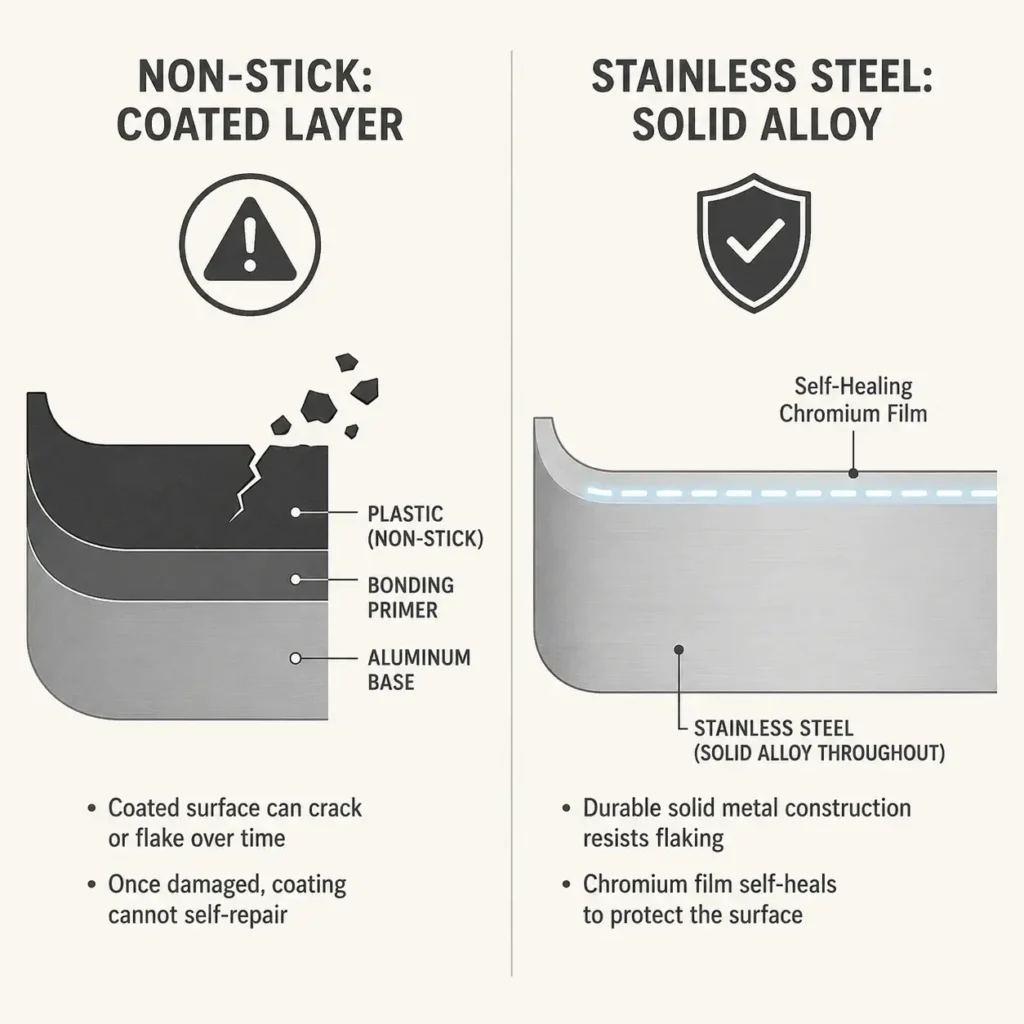
A non-stick pan is almost always an aluminum core coated with a synthetic polymer called polytetrafluoroethylene, or PTFE. If you want to dive into the molecular science of why absolutely nothing sticks to this material, you can read the highly detailed breakdown of polytetrafluoroethylene chemistry on Wikipedia [opens in new tab]. In plain terms, PTFE is a fluorocarbon solid with an incredibly low coefficient of friction. Neither water nor oil can easily wet it, which is why a fried egg slides around like a puck on air.
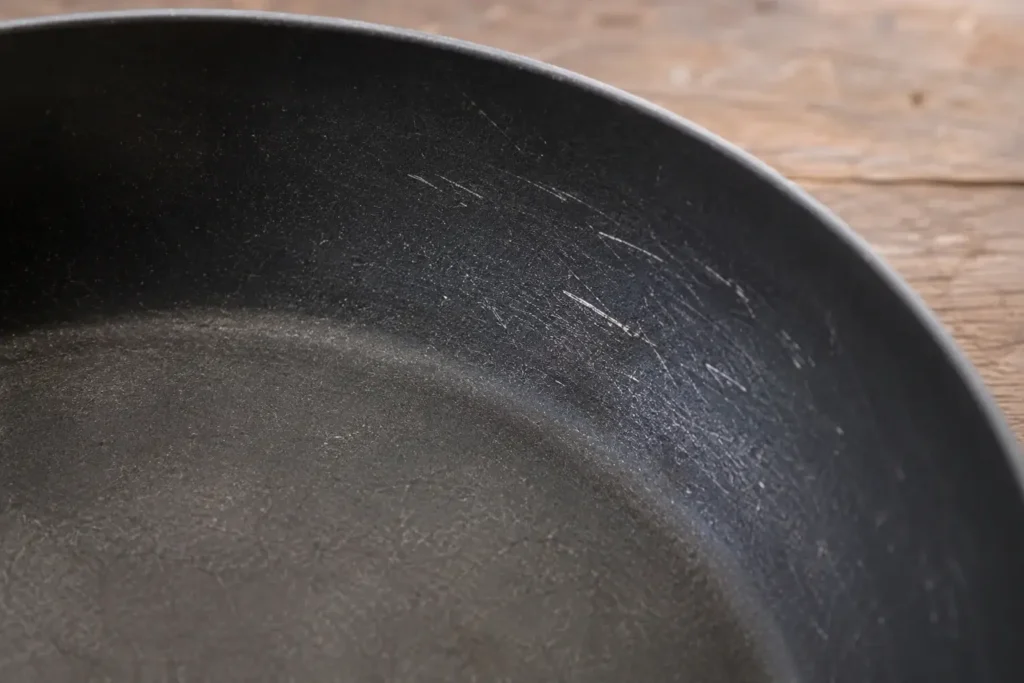
The catch? That slippery plastic layer is incredibly thin and mechanically weak. It is sitting on top of the metal, held down by specialized chemical primers. It is, by its very nature, a temporary surface.
Stainless steel is an entirely different animal. It isn’t a coating; it is a solid iron-based alloy. To be legally classified as stainless steel, the metal must contain at least 10.5% chromium. To understand the exact metallurgical standards, you can check out the industrial specification profiles for stainless steel on Wikipedia .
When that chromium is exposed to oxygen, it instantly forms an invisible, microscopic layer of chromium oxide on the surface of your pan. This is called a passive film. If you scratch a stainless steel pan, the exposed metal immediately reacts with the air and heals itself. There is no coating to wear away because the material is uniform all the way through the wall of the pan.
The Failure Modes: How They Die
Every consumer product has a finite lifespan, but the way these two pans break down is completely different. My accounting brain looks at product testing protocols, and if you want to understand how third-party labs measure kitchen product lifespans, you can review the NSF home products testing protocols and sanitation standards [opens in new tab], which outline specific durability metrics for stovetop cookware.
How Non-Stick Pans Fail
Non-stick pans don’t just stop working one day; they suffer from a slow, compounding degradation that usually ends in the trash can.
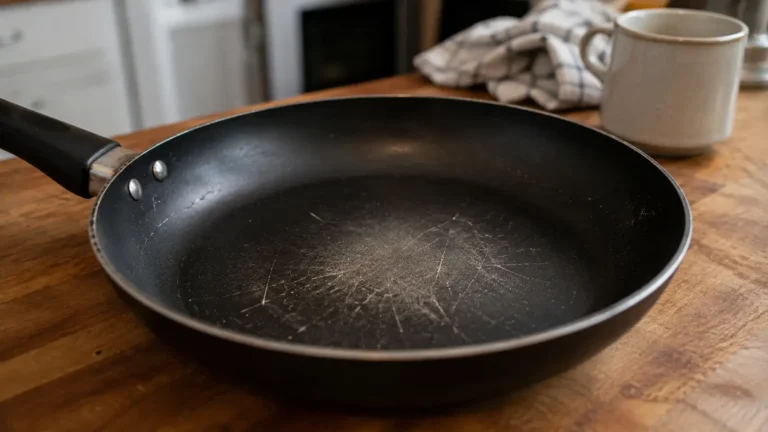
- Micro-Scratching: Even if you swear you only use silicone spatulas, tiny abrasive particles in your food (like coarse sea salt or hard peppercorns) or rough storage habits will create micro-scratches. Over time, these scratches catch food fibers, and the non-stick effect rapidly diminishes.
- Thermal Shock and Warping: Aluminum expands and contracts quickly when exposed to temperature shifts. If you take a hot non-stick pan and drop it into a sink filled with cool water, the metal core will warp. Once the flat bottom bows, heat distributes unevenly, and the non-stick coating degrades even faster on the hot spots.
- Chemical Degradation (Overheating): PTFE is stable up to a point. If you leave an empty non-stick pan on a high burner while you run to answer the door, the temperature can easily clear 500°F (260°C) in under two minutes. At that threshold, the polymer chains begin to structurally break down, losing their slickness permanently.
How Stainless Steel Pans “Fail”
Here is the secret about stainless steel: it almost never experiences a fatal structural failure. Instead, it suffers from cosmetic issues or user errors that people mistake for permanent damage.
- Heat Tinting (Rainbow Staining): When you heat stainless steel to high temperatures, the chromium oxide layer thickens. This alters how light reflects off the metal, creating a swirling, rainbow-colored stain on the bottom of the pan. It looks like an oil slick, but it is completely harmless and can be wiped away in ten seconds with a splash of vinegar.

- Pitting Corrosion: If you drop coarse salt into cold water in a stainless steel pan and let it sit at the bottom without dissolving, the high concentration of chloride ions can attack the protective chromium oxide layer. This leaves tiny, microscopic pinholes in the steel. It is permanent, but unless you do it constantly for a decade, it won’t affect how the pan cooks.
- Polymerized Oil Buildup: If you cook with oil at high heat and don’t wash the pan thoroughly, a sticky, amber-colored layer of cooked-on grease will varnish the surface. People often think their pan is ruined because food sticks to this varnish. In reality, a quick scrub with an oxalic acid cleaner like Bar Keepers Friend strips it right back to bare, shiny metal.
[YOUTUBE EMBED: “How to Clean and Maintain Stainless Steel Cookware” — America’s Test Kitchen — This video demonstrates how to remove stubborn polymerized oil and heat tint using basic kitchen pantry items.]
Ledger Breakdown: Cost vs. Lifespan Math
Let’s look at the numbers. When I bought my first apartment gear, I thought spending $25 on a non-stick skillet was a smart, budget-conscious move. I was completely wrong because I wasn’t accounting for the replacement cycle.
A high-quality non-stick pan, even if handled with absolute care, has an operational life of roughly two to three years. If you buy a cheap option and use it daily with metal forks or high heat, that lifespan drops to about 12 months before the coating flaks.
A decent 3-ply stainless steel pan costs more upfront, but its lifespan is essentially infinite. It can easily last 30 to 40 years, often surviving long enough to be handed down to your kids.
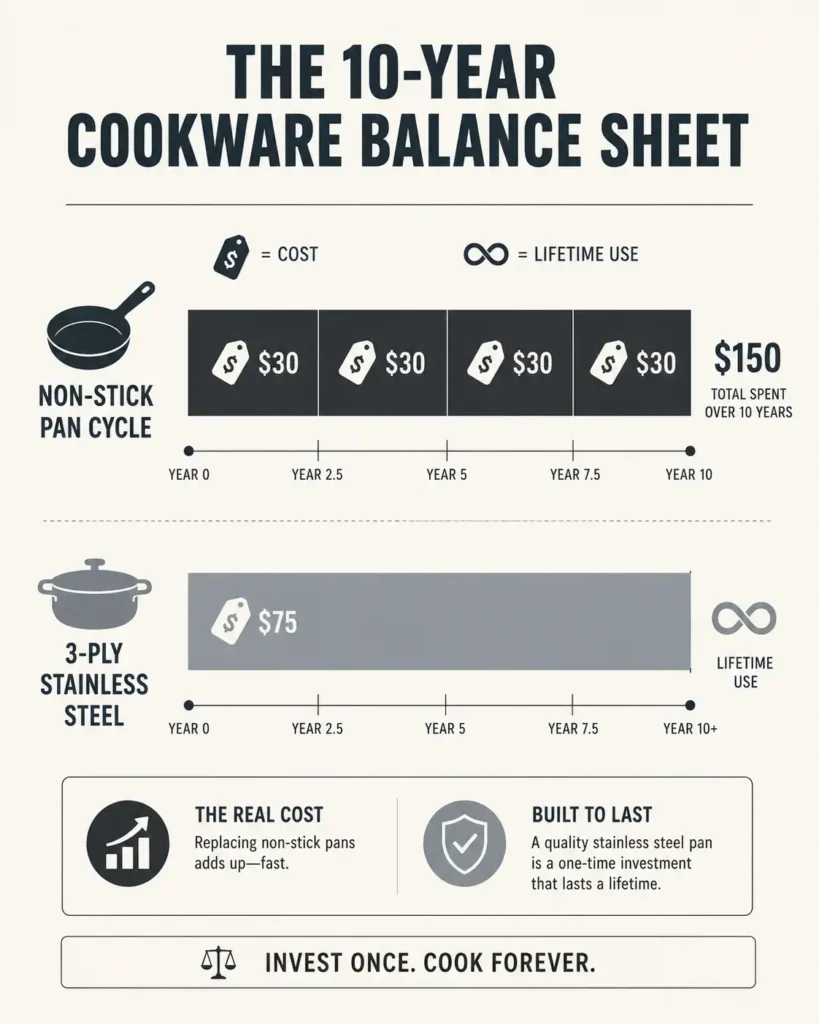
Let’s run a quick 10-year depreciation matrix to see how the math actually shakes out for a standard home cook:
| Financial Metric | The “Affordable” Non-Stick Pan | The Mid-Range 3-Ply Stainless Steel |
| Initial Purchase Price | $30.00 | $75.00 |
| Average Useful Lifespan | 2 Years | 40+ Years (Lifetime) |
| Replacements Needed (10 Yrs) | 4 Replacements | 0 Replacements |
| Total 10-Year Cash Outlay | $150.00 | $75.00 |
| Annual Depreciation Cost | $15.00 / year | $1.87 / year |
| Primary Failure Mode | Coating degradation, flaking | Superficial staining, minor scratching |
| Warranty Coverage | Excludes normal wear and tear | Covered against structural defects |
From a cash-flow perspective, buying a non-stick pan is a recurring subscription fee you pay to the kitchen hardware industry just to fry an egg. Stainless steel is a one-time capital investment.
The One-Star Review Audit: Real-World Frustrations
When I am researching gear, I completely ignore the glowing five-star reviews written the day the box arrived. I filter straight for the one-star complaints to see what happens when the honeymoon phase ends.
If you audit the bad reviews for top-selling non-stick pans on Amazon, you notice a clear pattern. Within six to nine months, users start posting photos of the center of the pan turning a dull brown or gray color, noting that “everything sticks now.” This happens because thin aluminum pans warp slightly in the center, causing the cooking oil to run to the outer edges. The dry middle of the pan overheats, baking the food proteins directly into the degrading pores of the plastic coating.
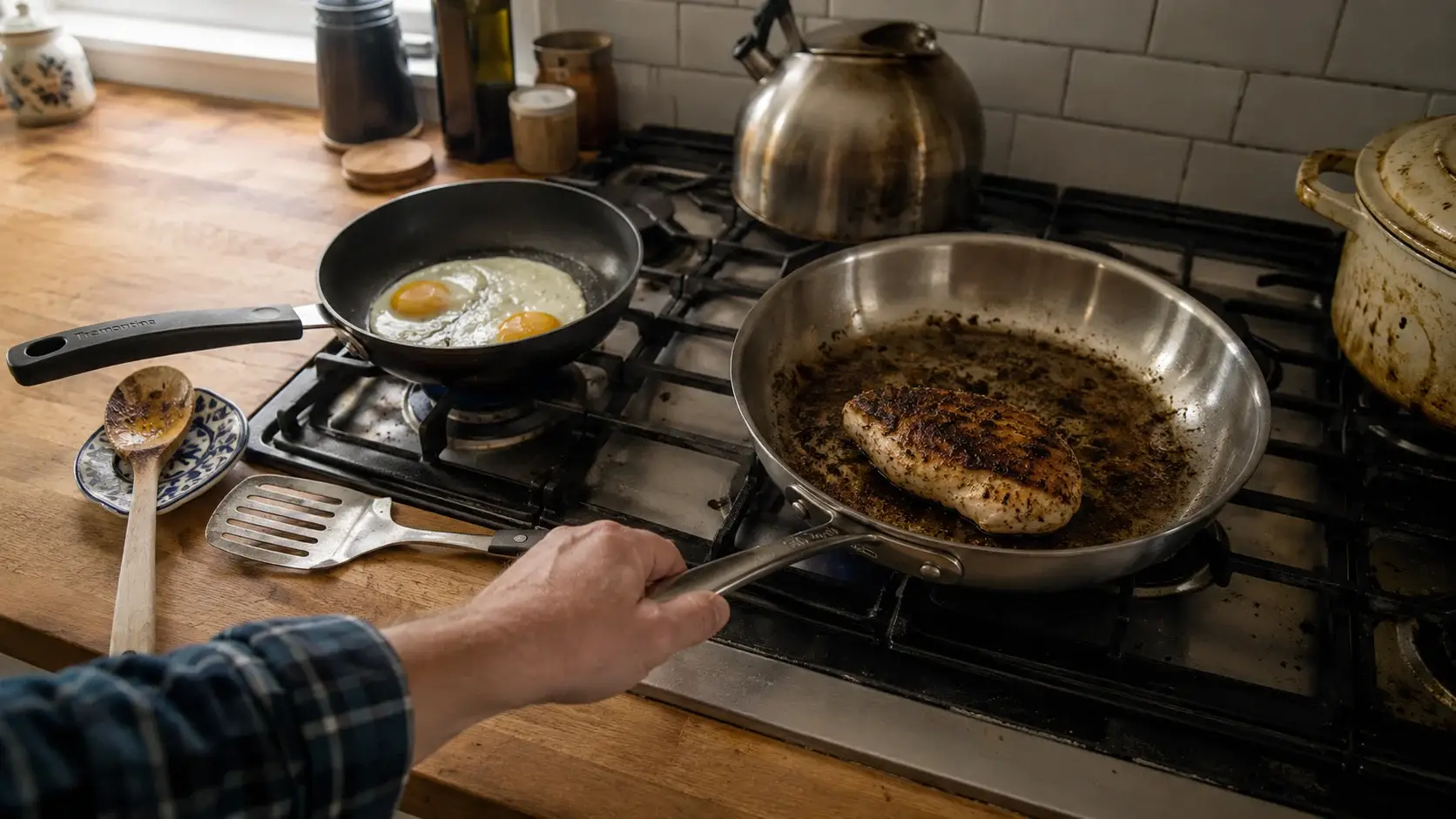
For stainless steel, the one-star reviews are almost entirely down to user error rather than product defects. The complaints are always some variation of: “I tried to cook a chicken breast and it literally glued itself to the pan. I had to use a chisel to get it off. This pan is defective.”
This isn’t a defective pan; it’s a failure to understand heat physics.
Performance Showdown: Eggs, Searing, and Pan Sauces
These pans don’t just differ in how they die—they operate on completely opposite cooking philosophies.
The Physics of Heat Transfer
Stainless steel skillets are typically built using “cladding,” meaning a layer of highly conductive aluminum or copper is sandwiched between two sheets of durable steel. This design absorbs a massive amount of thermal energy and holds onto it. When you drop a cold steak into a hot stainless steel pan, the pan’s temperature stays high, giving you a deep, dark brown crust.
Non-stick pans are lighter and have less thermal mass. When cold food hits the surface, the pan’s temperature plummets, causing the food to steam in its own moisture rather than crisp up.
The Sticky Science of Fond
When you roast meat or sauté vegetables in a stainless steel pan, tiny caramelized food particles stick to the bottom. In classical cooking, this layer is called the fond.
That sticking is actually an advantage. When you pour a splash of wine, stock, or lemon juice into the hot pan, those stuck bits dissolve instantly into the liquid. This process, known as deglazing, forms the rich, savory base of a traditional pan sauce.

In a non-stick pan, fond cannot form. The juices simply pool at the bottom, meaning your sauces will always taste flat and thin by comparison.
[YOUTUBE EMBED: “The Science of Cooking in Stainless Steel vs Nonstick” — Ethan Chlebowski — This video provides a side-by-side visual analysis of how food browns differently on metal versus non-stick surfaces, illustrating why fond matters for flavor.]
Safety, Toxicity, and the PTFE Panic
You cannot talk about non-stick cookware without addressing the anxiety surrounding chemical safety. Many people are terrified of non-stick coatings because of historical news stories about PFOA (perfluorooctanoic acid), a manufacturing aid used to make older non-stick surfaces that was linked to significant environmental and health concerns.
Let’s look at the actual regulatory landscape. To get the facts straight, I went straight to the FDA’s formal guidance on PFAS and authorized uses in food contact applications [opens in new tab]. Modern non-stick pans sold in the United States are completely free of PFOA. The chemical polymer used today is highly stable, and the high-temperature curing process used during manufacturing vaporizes virtually all small, migratable molecules.
The FDA notes that the solid, polymerized coating that remains on your pan passes through the human digestive tract without being absorbed if accidentally swallowed via small flakes.
However, modern PTFE still has a physical limitation: extreme temperature. If you dry-heat an empty non-stick pan on an induction or gas burner, it can quickly cross the 500°F threshold. At that point, the polymer begins to break down and release microscopic chemical fumes.
While these fumes are generally harmless to humans in small amounts, they can cause temporary, flu-like symptoms known as polymer fume fever. For households with pet birds, these fumes are highly hazardous, as avian respiratory systems are incredibly sensitive to airborne particulates.
Stainless steel has no such safety limitations. It is an inert alloy that does not off-gas or degrade at residential cooking temperatures. It won’t care if you leave it empty on a screaming hot burner, and it won’t emit a single fume if you slide it under a high oven broiler.
How to Choose: Real Products for Real Budgets
If you are setting up your first apartment kitchen or trying to fix a broken setup, you shouldn’t just go out and buy a massive 12-piece set of either material. Most pre-packaged cookware sets are stuffed with filler pieces—like tiny 1-quart saucepans or weirdly shaped griddles—that you will never actually use.
Instead, apply a targeted budget strategy. Buy individual pieces based on what they do best.
When to Buy a Non-Stick Pan
You only need a non-stick pan for delicate, high-protein foods that love to stick to bare metal. Think French omelets, scrambled eggs, delicate fish fillets, or quick weekday pancakes.
Do not spend $150 on a luxury non-stick pan. The coating will still wear out in a few years, no matter how fancy the brand name is. Buy an affordable, commercial-grade option that features a thick aluminum core and a sturdy handle.
For example, a standard 10-inch open skillet from an established commercial line like the Tramontina Professional Restaurant Skillet or the OXO Good Grips Pro Non-Stick is perfect. They offer excellent heat distribution, use durable riveted handles, and cost little enough that you won’t feel guilty when you have to recycle them after a few years of solid use.
When to Buy Stainless Steel
For everything else—searing chicken breasts, browning ground beef for a weekend chili, sautéing vegetables, making pan sauces, or boiling pasta—you want stainless steel.
Look for “3-ply fully cladded” construction. This means a layer of aluminum runs from the base all the way up the sides of the pan, ensuring even heating without random hot spots.
If you have room in your budget, a single All-Clad D3 Stainless Steel 10-inch or 12-inch Fry Pan is an industry standard for a reason; it is incredibly durable and holds its value forever. If you want the exact same performance metrics without paying a premium for the brand name, options like the Tramontina Tri-Ply Clad Skillet or the Cuisinart MultiClad Pro offer identical 3-ply construction at a fraction of the cost.
The Verdict: Which Pan Belongs in Your Kitchen?
If your goal is to buy a tool that will never experience a fatal failure, stainless steel wins by a landslide. It cannot flake, it cannot delaminate, it cannot warp under normal use, and it handles mistakes with absolute grace. It forces you to learn how to control your stovetop temperature and how to use oil correctly, which makes you a significantly better home cook in the long run.
That said, non-stick pans aren’t the enemy—bad non-stick habits are. If you treat a cheap non-stick pan as a temporary tool, keep its heat low, wash it exclusively by hand, and use it only for eggs and fish, it serves a highly practical purpose.
My recommendation? Stop picking sides. Build a small, efficient toolkit. Buy one good 10-inch or 12-inch fully cladded stainless steel skillet to handle your heavy searing, braising, and pan sauces. Then, buy one budget-friendly 8-inch or 10-inch non-stick pan dedicated solely to morning eggs.
This simple arrangement keeps your upfront acquisition costs low, stops you from burning through expensive cookware subscriptions, and ensures you always have the right tool for the job.
Cookware Maintenance & Physics FAQ
Why does everything stick to my stainless steel pan?
Food sticks to stainless steel because of two factors: improper pan temperature and a lack of cooking fat. When metal heats up, the microscopic pores in the steel expand and contract. If you drop cold food into a cold pan, the expanding metal grabs onto the food’s proteins like a vice.
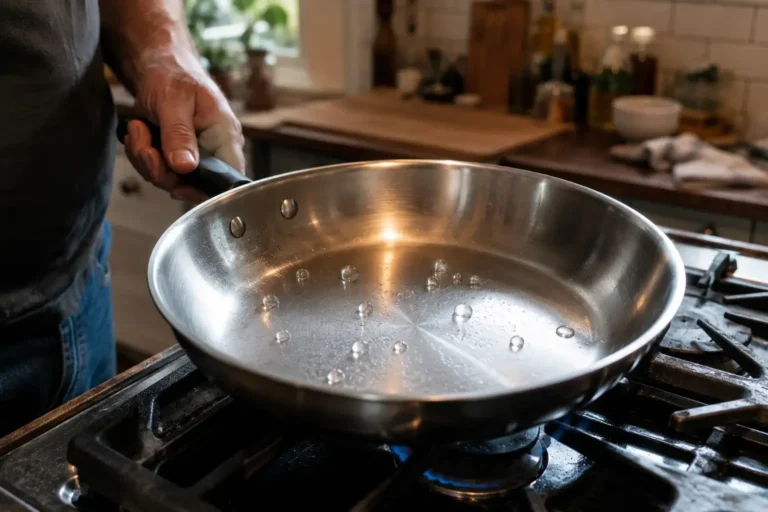
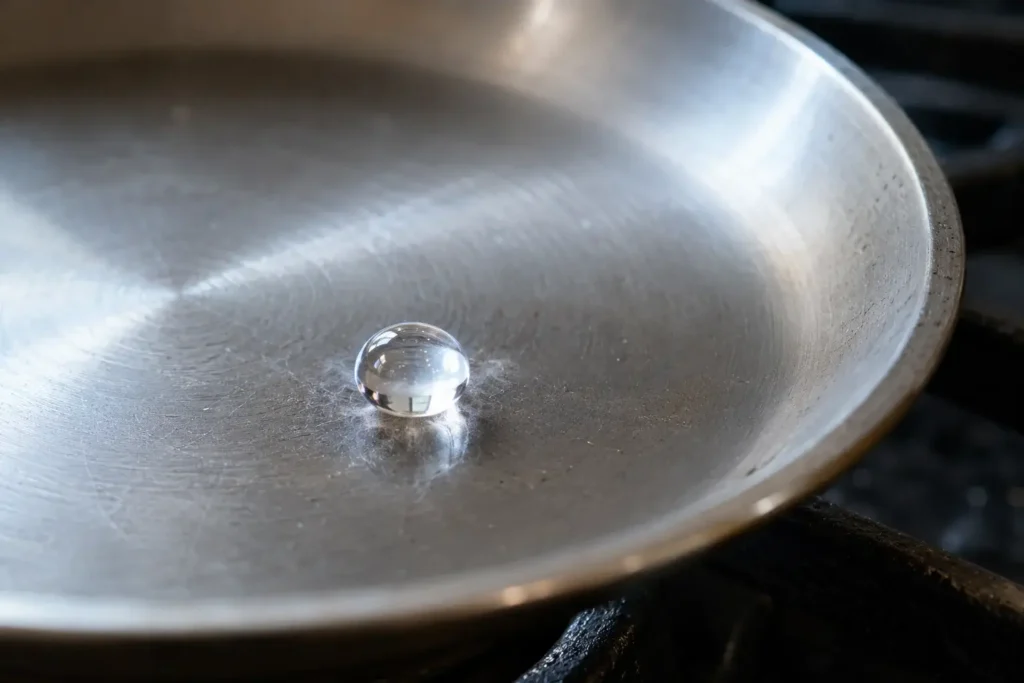
To fix this, use the “Leidenfrost effect” trick. Heat your dry stainless steel pan over medium heat for two to three minutes. Drop a single bead of water into the pan; if it sizzles and evaporates instantly, the pan is too cold. If the water bead stays whole and rolls around the pan like a ball of liquid mercury, your pan is at the perfect temperature.

Add your oil, let it shimmer for five seconds, and then add your food. The intense heat instantly cooks the surface proteins of your food, creating a natural steam barrier that prevents sticking.
Can I use metal utensils on a stainless steel pan?
Yes. Stainless steel is a hard, resilient alloy that can easily withstand steel spatulas, metal whisks, and tongs. You might see light, superficial scratch marks on the surface over time, but these are purely cosmetic and will not alter the pan’s cooking performance or safety. This is one of the main reasons commercial restaurant kitchens run almost exclusively on stainless steel—cooks don’t have time to worry about scratching a delicate plastic coating during a busy dinner service.
Is scratched non-stick cookware dangerous to use?
If your modern PTFE non-stick pan has a few light surface scratches, it is generally safe to continue using, though food will likely start sticking to those areas. However, if the coating is actively peeling, flaking, or blistering off in chunks, you should stop using the pan immediately. While eating tiny flakes of modern PTFE won’t poison you, a peeling coating means the chemical bond between the primer layer and the underlying aluminum base has completely failed, and you run a high risk of exposing the bare aluminum to acidic foods.
How do I clean burned-on grease off stainless steel without scratching it?
Never use coarse steel wool or abrasive metal scrubbers on stainless steel, as they can leave deep scratches that make future sticking worse. Instead, make a thick paste out of water and an oxalic acid powder cleaner like Bar Keepers Friend. Apply the paste to the stained areas, let it sit for exactly one minute, and then scrub firmly with a non-scratch blue sponge or a nylon brush. The oxalic acid chemically breaks down the bonds of the polymerized organic grease, allowing you to wipe away stubborn, dark stains without scouring the underlying metal alloy.
Why did my non-stick pan lose its stickiness even though it isn’t scratched?
Your pan likely has a microscopic layer of carbonized cooking oil baked directly into the pores of the non-stick coating. This happens when you use aerosol cooking sprays (like Pam) or heat olive oil past its smoke point. Aerosol sprays contain chemical propellants like lecithin that cook onto the non-stick polymer at low temperatures, creating a sticky residue that is incredibly difficult to remove with standard dish soap. To fix this, gently scrub the pan with a paste of baking soda and water using a soft nylon sponge to lift the residue without damaging the underlying coating.
Can stainless steel cookware go in the dishwasher?
While most manufacturers label stainless steel as dishwasher-safe, it is highly recommended to wash your pans by hand. Modern dishwasher detergents contain highly abrasive chemical salts and minerals that can dull the polished exterior of the steel over time. Furthermore, the intense humidity and prolonged drying cycles inside a dishwasher can cause the exposed aluminum layers along the rim of cladded pans to slowly corrode and pit, causing the layers to eventually separate. A quick two-minute scrub with hot water and standard liquid soap is always the safer choice.