Copper Cookware: Is It Worth the Price for Home Cooks?
A few weeks ago, my sister Paige sent me a link to an online mood board featuring a kitchen that looked like it belonged in a rural French commune. Hanging from a rack above a massive wooden island were six gleaming, heavy copper pots.
“Derek,” she texted, “Look at these. We need to recommend a full copper set for the site. They are gorgeous.”
I opened my laptop, pulled up a spreadsheet, and spent forty-five minutes looking through 1-star reviews for high-end copper cookware sets on Amazon and specialty culinary sites. Then I texted her back a calculation of what a full set of French copper actually costs (and what it costs to maintain it over five years), followed by a photo of my own battered, $30 ten-inch cast-iron skillet holding a batch of half-burned chili.
“They look pretty,” I said. “But unless you have a spare grand sitting around and a burning desire to spend your Sundays polishing metal, nobody cooking in an apartment should buy these.”
That conversation is exactly why I’m writing this. If you search for information about copper pans, you usually find two types of writers. You either get high-end lifestyle design bloggers who care more about how a pan photographs than how it heats, or professional chefs who live in a world where someone else handles the dishwashing.
Let’s look at this like an accountant who happens to cook weeknight dinners. We are going to strip away the romance of French kitchens and look at the actual physics of heat, the real cost of ownership, and the maintenance chores. By the end of this, you will know exactly whether you should buy a piece of copper or stick with standard stainless steel.
The Physics of Copper: Why Chefs Obsess Over It
To understand why copper costs what it does, you have to look at how it handles heat. In the world of metals, copper is a speed demon.
In engineering terms, we talk about thermal conductivity (which is just a fancy way of measuring how fast heat moves from your stove burner through the bottom of the pan and into your food). Pure copper has a thermal conductivity rating of around 401 Watts per meter-kelvin ($W/m\cdot K$). To put that into perspective, standard stainless steel sits down around 15 to 30 $W/m\cdot K$.
That means heat moves through copper roughly twenty times faster than it moves through stainless steel.
When you turn up the gas flame under a copper pan, the pan heats up almost instantly. There is no waiting around for five minutes for a cold spot in the middle of the metal to catch up with the edges. More importantly, when you turn the flame down, the pan stops cooking immediately. It doesn’t hold onto residual heat the way heavy cast iron does.
If you are making a delicate reduction sauce, melting chocolate, or tempering eggs, that instant response is incredibly helpful. If a sauce starts to bubble too hard and threatens to break or curdle, you drop the burner dial, and the pan cools down within two seconds. In a standard multi-ply stainless pan, that cooling process takes much longer, which is usually how home cooks wind up with scorched sauces.
But here is the catch: most weeknight dinners don’t require that level of precision. If you are boiling water for pasta, browning ground beef for a basic meat sauce, or simmering a Sunday pot roast, that lightning-fast thermal speed doesn’t give you any advantage at all. The water won’t boil noticeably faster, and the beef won’t brown any better than it would in a standard aluminum-core skillet.
The Big Danger: Reactivity and the Toxicity Myth
If you look at antique copper pans, you will notice they are often bright orange on the outside but silver or dull grey on the inside. That isn’t just for decoration.
Pure copper is highly reactive. When bare copper comes into direct contact with acidic foods (like tomato sauce, lemon juice, vinegar, or even wine), the acid reacts with the metal. This chemical reaction causes copper ions to leach directly into your food.
If you eat food that has been cooked in unlined copper over a long period, or if you consume a high concentration of leached metal from a highly acidic sauce, it can cause real issues. The symptoms aren’t pleasant—think sudden nausea, vomiting, and stomach cramps. To understand the safety limits, I checked the Dartmouth Toxic Metals Research Program’s data on copper exposure, which notes that while our bodies need tiny amounts of copper to function, large doses from unlined cookware can quickly overwhelm your system and cause acute gastrointestinal distress.
Because of this metal leaching, the FDA has strict guidelines for commercial kitchens. To see the specific rules, I looked directly at the Clemson University Extension overview of FDA cookware safety regulations, which states that the Food and Drug Administration cautions against using unlined copper for general cooking because everyday acidic foods easily dissolve the metal into toxic quantities.
The only time professional bakers use bare, unlined copper is for beating egg whites or boiling pure sugar for candy. When you whip egg whites in a bare copper bowl, microscopic amounts of copper ions detach and bond with a protein in the egg whites called conalbumin. This bond creates an incredibly stable foam that is almost impossible to over-whip. But for anything involving salt, acid, or fat, the pan must have an internal lining.
Modern copper cookware manufacturers solve this by lining the inside of the pan with a protective barrier of non-reactive metal. Today, you have two primary options for that lining: traditional tin or modern stainless steel.
Tin vs. Stainless Steel Linings: The Real Maintenance Cost
Choosing between a tin lining and a stainless steel lining is where your long-term ownership costs are decided. This is the part of the buying process where my accounting brain kicks in, because the purchase price of the pan is only your initial cash layout. The real question is what it costs to keep that pan in service over ten years.
The Case for Traditional Tin Linings
Tin was the standard lining for centuries. It is an amazing material because it is highly non-reactive, distributes heat beautiful, and has natural non-stick properties. Food releases from a tin-lined pan much easier than it does from stainless steel.
However, tin has two massive vulnerabilities that make it tough for a casual home kitchen:
- The Melting Point: Tin melts at exactly 450°F (232°C). If you place an empty tin-lined copper pan on a hot burner to preheat it for a steak, the tin lining will liquefy, bubble, and ruin the pan within sixty seconds. You can never use a tin-lined pan for high-heat searing or dry-frying.
- Wear and Tear: Tin is a very soft metal. If you use a metal spatula or an abrasive green scrubbing pad on it, you will scratch right through the lining. Even if you only use wooden spoons and gentle sponges, that tin layer slowly wears down over time from normal friction.
Eventually, the copper underneath will begin to peek through the silver tin layer. When that happens, you have to pack up your heavy pan, ship it off to a professional coppersmith, and pay to have it scraped down and re-tinned by hand.

The Case for Stainless Steel Linings
Most modern premium copper cookware (like Mauviel or Ruffoni) features an interior lining of thin stainless steel. The steel layer is mechanically bonded to the copper exterior under immense pressure.
Stainless steel solves almost every practical problem that tin creates. It is virtually indestructible. You can use metal whisks, sear steaks at high temperatures, scratch it with a fork, and scrub it with a scotch-brite pad without doing any structural damage. It will never melt, and it will never need to be sent away for expensive maintenance. It lasts for the entire lifespan of the pan.
The downside? Stainless steel is a poor thermal conductor compared to tin, which slightly degrades the legendary responsiveness of the copper outer shell. It is also sticky—if you don’t use enough oil or if your temperature control is off, your chicken breasts will stick to the bottom like superglue.
Here is a quick look at how these two linings stack up for an everyday cook:
| Feature | Tin-Lined Copper | Stainless Steel-Lined Copper |
| Max Temperature | 450°F (Strict limit) | 600°F+ (Safe for searing) |
| Lifespan of Lining | 5 to 15 years (Then needs relining) | Lifetime (Permanent bond) |
| Utensil Safety | Wood or silicone only | Any utensils (including metal) |
| Food Release | Smooth, semi-nonstick | Sticky (Requires fat and technique) |
| Maintenance Cost | $50–$100 per pan every decade | $0 |
The Illusion of “Copper-Core” Cookware
If you walk into a department store or browse online sales, you will find dozens of mid-priced pans labeled as “Copper-Core” or “Tri-Ply Copper.” These are not true copper pans. They are standard multi-ply stainless steel pans that happen to have a thin ribbon of copper buried inside their base.
To see how these layers are built under the hood, I reviewed the foundational metallurgical explanations on Wikipedia’s cookware and bakeware page, which details how manufacturers sandwich different sheets of metal together to balance manufacturing costs against thermal performance.
In a typical copper-core pan (like All-Clad’s Copper Core line), the structure looks like a five-layer biscuit. You have a stainless steel cooking surface, a layer of aluminum, a microscopic core of copper, another layer of aluminum, and an exterior sheet of magnetic stainless steel so the pan works on induction stoves.
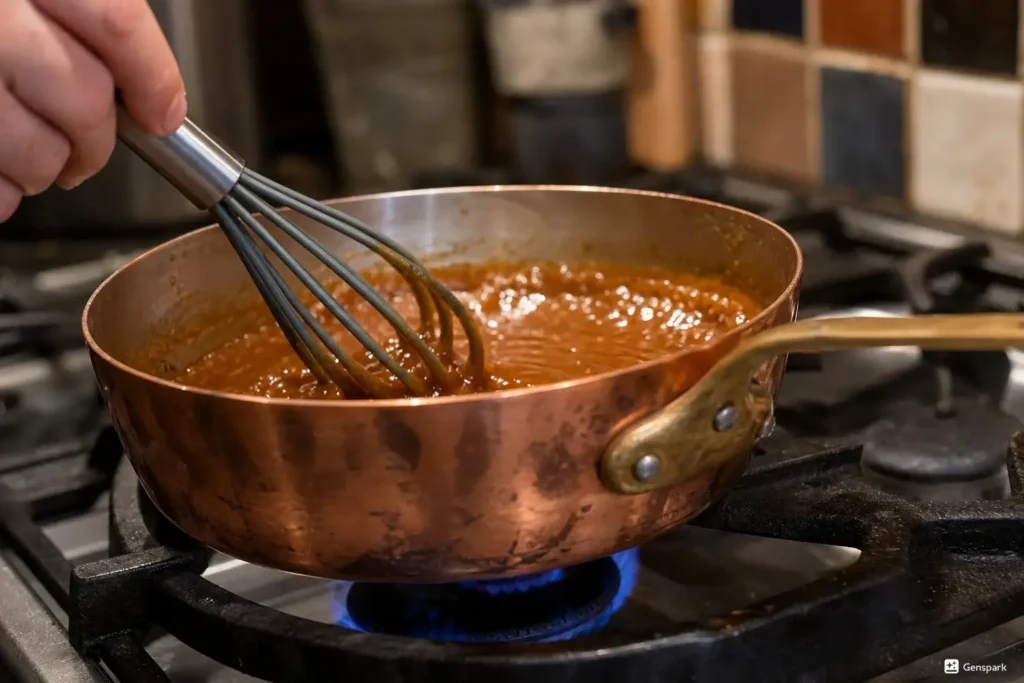
Here is what your money actually buys in that scenario: you are paying a massive price premium for a layer of copper that is often less than one millimeter thick.
Because that copper layer is completely trapped inside thick walls of stainless steel (which acts as a thermal insulator), you lose almost all of the instant responsiveness that makes pure copper worth buying in the first place. The pan heats up and cools down at roughly the same speed as a standard, much cheaper aluminum-core pan.
Worse yet, some brands sell pans that are completely made of aluminum but feature a thin cosmetic exterior plating of copper paint or flash-plated copper dust. This exterior coating is purely aesthetic. It is so thin that it offers zero thermal benefit, and it usually scratches off or discolors after three trips through a dishwasher. If you want to see how these mid-priced layered pans perform in standardized setups, I checked the testing methodology overviews at Consumer Reports, which highlight how multi-ply pans are evaluated based on even heat distribution across different cooktop burners rather than marketing buzzwords.
If you are going to buy copper for its performance, the pan wall thickness needs to be between 1.5mm and 2.5mm of actual, solid copper. Anything less than that is just a very expensive cosmetic paint job.
The Cold, Hard Financial Calculation
Let’s run the numbers like an accountant looking at an asset depreciation schedule. Let’s compare a premium 10-inch stainless-lined copper skillet against a standard 10-inch multi-ply aluminum-core stainless steel skillet (like a basic Tramontina or All-Clad D3) over a fifteen-year period.
- Initial Layout: A solid 2.3mm thick French copper skillet will easily run you $250 to $350. A high-quality clad stainless steel skillet costs between $40 and $110.
- Aesthetic Depreciation: The copper pan looks stunning out of the box. After its first encounter with a gas flame, it develops brown scorch marks, purple heat tint, and dark tarnish. To keep it looking like a Pinterest board, you have to buy specialized copper polish and spend ten minutes scrubbing the exterior every single time you use it. If you don’t, it turns a dull, dark brown. The clad stainless pan can be thrown in the sink, scrubbed with steel wool, and ignored.
- Stove Compatibility: Pure copper does not work on induction cooktops. If you remodel your kitchen or move into an apartment with an induction range, your $300 copper skillet becomes an incredibly heavy paperweight. Standard clad stainless pans usually have an exterior layer of magnetic steel, meaning they work on every heat source available.
From a strict value-for-money perspective, the return on investment for pure copper is incredibly low for 95% of home cooking tasks. You are paying a 300% price premium for a 5% increase in thermal responsiveness that only matters when you are executing advanced pastry techniques or French reduction sauces.
When Is Copper Actually Worth It?
I know I’ve been tough on copper for the last few pages, but I don’t completely hate it. There is a small group of home cooks who should absolutely save up and buy a single, well-chosen piece of copper.
You should consider buying a copper piece if:
- You make high-end pastry or candies: If your hobbies involve melting sugar, tempering chocolate, or turning out delicate egg-based sauces like Hollandaise or Béarnaise on a weekly basis, a copper saucier pan will genuinely make your life easier. It prevents hot spots from scorching your sugar and cools down fast enough to save an egg sauce from splitting.
- You cook on a finicky, uneven gas stove: If your apartment stove has cheap burners that shoot high flames out of one side and low flames out of the other, a thick copper pan will rescue your food. The high conductivity pulls that uneven heat and spreads it perfectly across the entire bottom of the pan before it touches your ingredients.
- You want an heirloom item that lasts forever: A solid, heavy-gauge copper pan with a stainless steel lining is practically indestructible. If you buy a quality piece from a heritage brand, that pan will easily outlive you, your kids, and your grandkids. It is an investment asset, not a disposable kitchen tool.
If you fall into that camp, do not buy a whole matched set. That is a marketing trap designed to extract cash from wedding registries. Buy one single piece that matches a specific job.
For example, a Mauviel M’200B 1.9-Quart Copper Saucier is an exceptional choice for sauces because the sloped sides allow a whisk to clear every corner, and the 2mm solid copper thickness provides incredible temperature control. It is an investment tool for people who love the craft of sauce-making.

On the other hand, if you want something that handles high-heat searing for weeknight chicken or pork chops but still utilizes a smart multi-ply design, look at something like the All-Clad D3 Stainless Steel Skillet. It uses a highly conductive aluminum core wrapped in durable stainless steel, giving regular home kitchens 90% of the practical benefits of copper at a fraction of the cost and zero maintenance friction.

Comprehensive FAQ Section
Is unlined copper cookware safe to use for everyday cooking?
No. Unlined copper is highly reactive with acidic ingredients like tomatoes, wine, citrus juice, and vinegar. When these foods hit bare copper, a chemical reaction occurs that leaches metal ions directly into the food. Consuming large quantities of leached copper can cause acute illness, including stomach cramps, nausea, and vomiting. Unlined copper should only be used for specialized, non-acidic tasks like whipping egg whites or boiling pure sugar solutions for candy making.
Does copper cookware work on modern induction cooktops?
Pure copper cookware will not work on an induction stove. Induction cooktops rely on magnetic fields to generate heat directly within the pan, and copper is non-magnetic. If you place a classic copper pan on an induction burner, nothing will happen. If you have an induction stove but love the copper look, you must purchase specialized “induction-compatible” copper pans, which feature an added plate of magnetic stainless steel bonded to the very bottom of the pan.
Why do old copper pans turn green or dark brown?
Copper reacts naturally with oxygen and moisture in the air, a chemical process known as oxidation. Over time, this creates a dark brown or black layer on the surface called tarnish. If exposed to moisture or acid over long periods, it can develop a bright green crust called verdigris. While this tarnish protects the metal from deeper corrosion, it ruins the bright shine of the pan. To prevent this, copper pans must be regularly polished with an acidic paste like lemon juice and salt or a commercial cleaner.
How can I tell if a copper pan is thick enough to cook well?
To get the real performance benefits of copper, the pan walls must be between 1.5mm and 2.5mm thick. You can check this by looking closely at the top rim of the pan where the metal layers are exposed. If the copper layer looks as thin as a piece of paper or a fingernail, it is a decorative piece intended for display or table service, not high-performance cooking. Heavy, professional-grade pans feel incredibly heavy when you lift them by the handle.
Can I put my copper cookware into the dishwasher?
Absolutely not. The harsh detergents, high heat, and intense water spraying inside a dishwasher will instantly strip away the beautiful polished surface of copper, leaving it dull, spotted, and heavily oxidized. Dishwasher chemicals can also attack the delicate tin linings or degrade the bond between the copper and stainless steel layers. Copper cookware must always be washed by hand in the sink using warm water, mild dish soap, and a soft sponge.
What should I do if the lining of my copper pan gets scratched?
If you have a stainless steel-lined copper pan, minor surface scratches from normal cooking utensils are completely fine and will not affect safety. However, if you have a traditional tin-lined pan and you see the pinkish-orange glow of bare copper peeking through a scratch on the cooking surface, you must stop using the pan for general cooking. The exposed copper can leach into your food. You will need to send the pan to a professional coppersmith to be scraped down and re-tinned.