Best Woks for Beginner Home Cooks: Buy Flat Bottom
You see them on cooking shows all the time. Professional chefs standing over jet-engine gas burners, tossing mountains of rice three feet into the air using a giant, round-bottom metal bowl. It looks incredible. It looks fast. It looks completely impossible to do in a standard apartment kitchen without setting off the smoke detector and making a massive mess.
When my sister Paige started texting me Pinterest links to beautiful, shiny hammered-metal woks, asking which one she should buy, my accounting brain went straight to work. I did what I always do: I ignored the gorgeous lifestyle photos, skipped the five-star marketing copy, and went directly to the one-star reviews.
The truth in those reviews is brutal. Beginner home cooks buy traditional round woks, put them on a standard flat electric coil or glass-top stove, and watch them wobble, roll around, and fail to heat up.
If you are looking for the best woks for beginner home cooks, let me save you three weeks of research and a lot of wasted money. You need to buy a flat-bottom wok. Period. Here is why the flat bottom wins for normal kitchens, which materials actually hold up, and how to spot a bad pan before you spend your hard-earned cash.
Why the Flat Bottom Design is Non-Negotiable at Home
Traditional woks have a completely round bottom. They were designed centuries ago to sit nestled directly into hollow wood-burning or coal-burning brick stoves. The flames wrapped around the entire bowl, heating the bottom and the sides at the exact same time.
Your home kitchen does not work like that. Unless you own a specialized commercial kitchen or an outdoor propane burner that looks like a rocket booster, your heat source is flat.
If you put a round wok on a flat gas grate, it wobbles like a spinning top. If you put it on a flat electric or induction glass stovetop, the tiny point of contact means almost zero heat transfers to the metal. You end up boiling your chicken in its own juices instead of searing it.
A flat-bottom wok solves this completely. It has a flat base (usually around 4 to 5 inches wide) that sits flush against your stove burner.
- Stability: It stays perfectly still when you stir your food. You do not need to hold the handle with a death grip just to keep the pan from tipping over.
- Heat Transfer: The flat base absorbs heat directly from your electric coil, induction glass, or standard gas grate. It creates a highly concentrated hot zone right where your food hits the pan.
- No Extra Gear Needed: Round woks require a metal accessory called a wok ring to keep them upright. But a wok ring lifts the pan even further away from the burner, which makes it nearly impossible to get the metal hot enough on a home stove. A flat-bottom wok completely eliminates the need for extra metal rings.
The goal of a wok is to get very hot very fast, cook your meat and vegetables in small batches, and move them up the cooler sloped sides while you drop the next ingredient into the center. A flat-bottom design gives you that exact setup without requiring a professional restaurant renovation.
The Big Three Materials: Carbon Steel vs. Cast Iron vs. Nonstick
The absolute biggest point of confusion for beginner home cooks is material. Walk down the kitchen aisle and you will see carbon steel, cast iron, stainless steel, aluminum, and a dozen different types of nonstick coatings.
Let’s break down the only three options you should actually consider, using real data on durability and thermal properties.
1. Carbon Steel (The True Standard)
If you want a pan that cooks correctly and lasts long enough to pass down to your kids, buy carbon steel. It is the gold standard for a reason. Carbon steel is essentially a hybrid between a lightweight aluminum pan and a heavy cast iron skillet. It heats up incredibly fast, reacts to your stove dial adjustments within seconds, and is light enough to lift without straining your wrist.
The downside? It is reactive. That means it arrives as bare metal and requires “seasoning” — a process where you bake thin layers of oil onto the surface to create a natural, slick black coating. It cannot go in the dishwasher, and it will rust if you leave it wet in the sink.
2. Cast Iron (The Heavyweight)
Cast iron woks are excellent at holding onto heat. Once they get hot, they stay hot, which is great if your home stove has weak burners. They also come pre-seasoned from the factory, which saves you some initial setup work.
The massive flaw here is weight. A standard 14-inch cast iron wok can easily weigh 10 to 12 pounds empty. Trying to toss food or flip a stir-fry in a pan that heavy is a great way to sprain your wrist. They are also slow to react. If your stove burner is too hot and your garlic starts to burn, turning down the dial won’t help immediately — the thick iron will keep blasting maximum heat for several minutes.
3. Nonstick (The Beginner Trap)
Nonstick woks look incredibly tempting. They are cheap, easy to wash, and require zero special care. But the very nature of wok cooking destroys nonstick coatings.
To get a proper sear on a stir-fry, your pan needs to get very hot. However, traditional nonstick coatings (PTFE) are completely unsafe at these temperatures. Before I trusted any nonstick coating at high heat, I went straight to the FDA’s guidance on PTFE safety and food-contact materials to check how these chemicals behave. High temperatures cause nonstick coatings to degrade, break down, and release toxic fumes into your kitchen.
Furthermore, because you cook at high heat, cheap nonstick coatings will blister, peel, and flake off into your food within six months of regular use. It is a disposable pan that wastes your money.
Wok Material Comparison Table
To help my fellow spreadsheet lovers, here is exactly how the main wok materials stack up across the metrics that actually matter for daily home use.
| Material | Heat Response | Weight & Agility | Durability | Maintenance Required |
| Carbon Steel | Very Fast | Lightweight & Easy to Toss | Lifetime (Virtually Indestructible) | High (Hand wash & Oil only) |
| Cast Iron | Very Slow | Extremely Heavy (10+ lbs) | Lifetime (Virtually Indestructible) | Medium (Pre-seasoned, No soap) |
| Nonstick | Moderate | Medium to Lightweight | Short (1-2 years max) | Very Low (Dishwasher safe) |
How to Spot a Bad Wok Before You Buy It
My accounting brain treats every product purchase like a minor financial risk assessment. When you are looking at options on Amazon, do not look at the pretty food pictures. Look for these specific design flaws that make a wok frustrating or dangerous to use.
The Handle Rivet Problem
Woks generally come with two handle styles: a single long wooden handle (called a northern-style wok) or two small metal loop handles (called a southern-style wok). For home cooks, the long handle is much better because it lets you flip and stir food while keeping your hands away from the heat.
Look closely at how that handle connects to the metal bowl. Cheap woks use weak spot welds. Over time, the repeated heating and cooling causes those welds to snap, leaving you with a heavy, hot pan dropping onto your feet. Look for woks with heavy-duty metal rivets holding the handle bracket securely to the body.
The Metal Gauge (Thickness)
If a wok is too thin, it will warp the very first time you put it over high heat. The flat bottom will bow out, turning your pan into a useless, rocking bowl.
Look for carbon steel that is 14-gauge (about 1.5 millimeters thick) or 15-gauge (about 1.2 millimeters thick). If the product description does not list the thickness or gauge of the metal, skip it. That usually means the manufacturer used thin, cheap sheet metal that will distort under normal kitchen temperatures.
Real World Picks: Woks That Actually Work
You don’t need a million options. You just need a few solid pans that survive real kitchen environments. Here are the specific flat-bottom woks that earn their place in a standard kitchen.
1. Mammafong Preseasoned Carbon Steel Wok (14-inch Flat Bottom)
This is a phenomenal, heavy-duty carbon steel option for anyone who wants the performance of professional cookware without the headache of the initial blue-oxide seasoning process. It is crafted from authentic 14-gauge carbon steel, meaning it has the exact thickness required to resist warping on high-heat residential electric burners.
The flat bottom is perfectly sized to sit securely on flat gas grates or glass cooktops. It features a sturdy, riveted eucalyptus wood handle that stays completely cool to the touch during long cooking sessions, plus a helper handle on the opposite side to assist when moving a heavy batch of food. Because it comes factory preseasoned with natural oils, you can skip the intense stovetop oil-burning steps and start cooking immediately.
- Best For: Home cooks who want a traditional, durable carbon steel pan without the steep learning curve of initial seasoning.
2. Joyce Chen Classic Series Carbon Steel Wok (14-inch Flat Bottom)
If you want a reliable entry point that won’t strain your budget, this pan has been a staple in home kitchens for decades. It uses a slightly thinner 2-millimeter carbon steel construction that heats up incredibly fast even on weaker apartment stoves.
It comes as bare metal, which means you get to experience the traditional seasoning process yourself. The birchwood handle is securely riveted to the frame and includes a small metal loop for easy hanging storage. It gives you excellent agility and heat response for a fraction of the cost of premium brands.
- Best For: Budget-conscious beginners who want a lightweight pan and are willing to do their own initial seasoning.
3. Lodge Pro-Logic Cast Iron Wok (14-inch)
For those who absolutely refuse to deal with raw carbon steel maintenance, this heavy cast iron option is a tank. While it has a traditional round shape on the inside, the exterior features a thick, integrated flat base that sits perfectly flush on any flat cooking surface without a ring.
It comes pre-seasoned from the Lodge foundry using 100% natural vegetable oil, making it highly rust-resistant right out of the box. The massive heat retention ensures that even if you drop a large batch of cold, chopped vegetables into the pan, the temperature will not plummet.
- Best For: Cooks who love the set-it-and-forget-it durability of cast iron and don’t mind lifting a heavy, substantial piece of cookware.
How to Season and Clean Carbon Steel Without Overthinking It
People on the internet make carbon steel care sound like a mystical religion. They tell you to use special oils, wax blends, and elaborate multi-hour oven cycles. It is completely unnecessary.
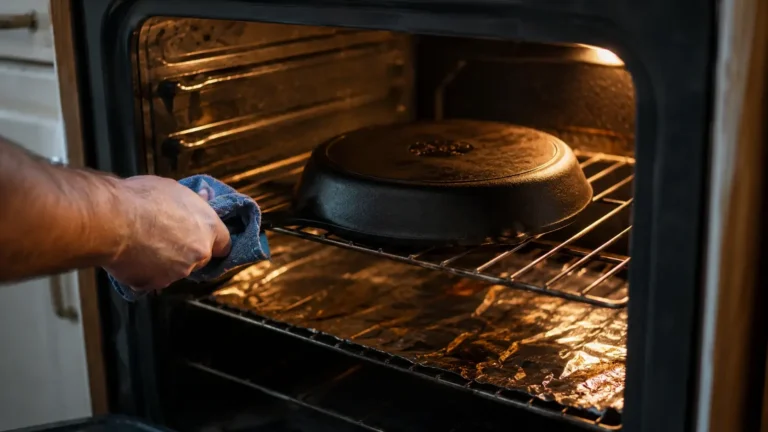
Think of seasoning as a simple chemical layer. When fats are heated to their smoke point, they undergo a process called polymerization. The liquid oil transforms into a hard, plastic-like solid that binds directly to the metal.
To keep your carbon steel working beautifully, you only need to understand the foundational science of metal care. For clear instructions on handling these materials safely, the Lodge Cast Iron official site offers excellent guides on seasoning, cleaning, and rust prevention that apply directly to carbon steel woks as well.
The No-Nonsense Cleaning Routine
- Wash it immediately: Once the pan cools down enough to touch, wash it under warm water. Use a gentle scrub brush or a non-scratch sponge.
- Skip the harsh stuff: You can use a tiny drop of mild dish soap if the pan is oily, but never use steel wool or harsh abrasive scouring powders. That will strip away your hard-earned nonstick layer.
- Dry it completely: Never let a carbon steel pan air dry in the rack. Wipe it down thoroughly with a clean towel, then put it back on a warm stove burner for 60 seconds to evaporate every single molecule of hidden moisture.
- Oil it lightly: Before putting it away in your cabinet, pour a tiny drop of neutral cooking oil (like canola or vegetable oil) into the pan. Use a paper towel to rub the oil over the entire inside surface until the metal looks dry but slightly shiny. This creates an airtight barrier that completely prevents rust.
Frequently Asked Questions
Do I need an induction-compatible wok if I have a glass stovetop?
Only if your glass stove specifically uses induction technology. Standard radiant glass electric cooktops use regular heating elements underneath the smooth surface, meaning any flat-bottom carbon steel or cast iron pan will work perfectly. If your stove is a true induction top (which uses magnetic fields to heat the pan directly), carbon steel and cast iron are naturally magnetic and will work beautifully, provided the flat base makes direct, continuous contact with the glass surface.
Can I cook highly acidic foods like tomatoes or vinegar in a new carbon steel wok?
It is highly recommended to avoid cooking acidic ingredients like tomato sauces, heavy vinegar glazes, or citrus juices in a brand-new carbon steel wok. Acid dissolves the thin, young layers of polymerized oil seasoning, stripping the pan back to bare metal and giving your food an unpleasant, metallic taste. Once your wok has been used regularly for several months and has developed a deep, thick, jet-black patina, it can handle short splashes of acid without any issues.
Why does my food stick to my flat-bottom carbon steel wok even though I seasoned it?
Sticking is almost always caused by incorrect temperature management rather than a failure of your pan’s seasoning. Beginner cooks often add food to a cold pan or put cold ingredients into oil that hasn’t reached the proper temperature. Always heat your dry wok thoroughly over medium-high heat before adding your oil. Once the oil is shimmering and just starting to show faint wisps of smoke, add your ingredients. This allows the heat to instantly flash-cook the exterior proteins of your food, creating a clean release instead of letting it bind to the metal pores.
What is the ideal size wok for a standard home kitchen stove?
A 14-inch diameter flat-bottom wok is the absolute sweet spot for home kitchens. A 12-inch wok is too small; the shallow sides don’t give you enough room to toss ingredients without spilling them all over your counter. Conversely, a 16-inch wok is far too large for a standard home stove burner — the edges will extend well past the heat source, leaving you with cold outer walls and an unevenly cooked meal. A 14-inch design gives you ample space to cook a meal for three to four people while still fitting perfectly over a standard household heating element.