Scratched? Non-stick pan lifespan & replacement
So, you’re standing over your kitchen sink, scrubbing a frying pan, and you see it. A grey line cutting right through the dark coating. Or maybe you notice that your morning eggs, which used to slide around like hockey pucks on ice, are suddenly sticking to the center like superglue.
You’re probably asking yourself the same question I asked when I moved into my first tiny apartment with a single cheap skillet: Is this thing safe, or am I eating plastic?
Let’s look at the numbers. Most cookware companies print a nice little promise on the box claiming their pans will last three to five years. Some even claim a lifetime warranty. But if you read the actual one-star reviews from people who use these things every single day, you see a completely different story. The reality is that a standard non-stick pan has a short shelf life compared to almost anything else in your kitchen.
I look at kitchen gear through what I call my accounting brain. I want to know the cost-per-use. If you buy a seventy-dollar pan and it fails in twelve months, that pan cost you almost six dollars a month. If you buy a twenty-five dollar pan that lasts the same amount of time, you win.
Let’s talk about the hard facts of your non-stick pan lifespan, how to know when it is officially dead, and how to stop ruining your next one before its time.
The Hard Truth About the Lifespan Numbers
If you are expecting a non-stick pan to become an heirloom you hand down to your kids, I have bad news. It won’t happen. Unlike a heavy piece of cast iron that gets better when your grandkids use it, non-stick coatings are on a slow, predictable path to the trash bin from the very first slide of an egg.
For a standard, daily-use non-stick skillet, a realistic lifespan is one to three years.
If you are incredibly careful—meaning you never let metal touch it, you never put it in the dishwasher, and you never heat it up without food inside—you might squeeze four or five years out of a high-end model. But for most of us cooking in normal kitchens, two years is the sweet spot where the coating simply gives up.
Why is the window so short? It comes down to chemistry. The material that makes these pans slippery is a plastic fluoropolymer, usually polytetrafluoroethylene. To understand how this material functions on a molecular level, I spent a weekend reading the foundational chemistry behind polytetrafluoroethylene properties on Wikipedia. This compound is amazing at repelling water and oil because of its tight bonds, but it is also a soft material. Every single time food rubs against it, or heat causes the metal underneath to expand and shrink, those microscopic bonds take a hit.
Eventually, the plastic wears thin. It is not a manufacturing defect; it is just how the material behaves.
Five Clear Signs Your Pan is Finished
You do not need a degree in engineering to diagnose a dead pan. You just need to know what to look for when you are washing up after breakfast. If your skillet shows any of the following signs, its time has come.
1. The Surface Looks Like a Roadmap (Scratches and Gouges)
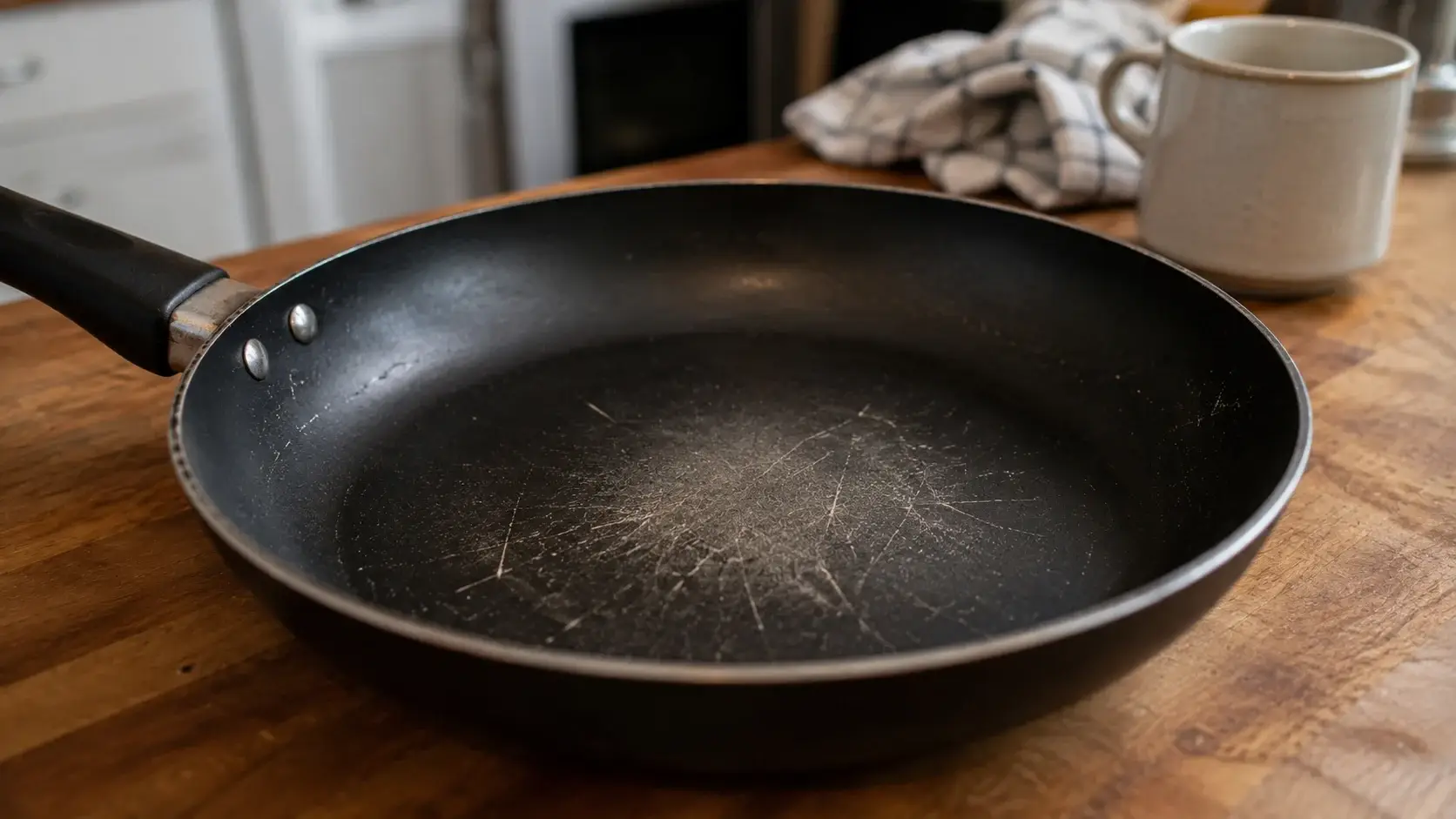
A tiny hairline scratch that you can barely see with your eyes is usually fine. But if you can feel the scratch with your fingernail, or if you can see the bright silver aluminum showing through the dark coating, the boundary is broken.
When a scratch gets deep, the edges of the coating around the cut become loose. Every time you heat the pan, water gets under those edges, turns to steam, and lifts more of the coating away.
2. Deep Discoloration That Won’t Wash Off
Pans change color over time. A light grey ceramic pan might turn a bit tan, and a dark PTFE pan might get a dull, cloudy look. That is normal staining from oils.
But if you see a dark brown or black ring right in the middle of the cooking surface that does not budge when you clean it with soap, that means the pan has been overheated. High heat changes the chemical structure of the coating. Once it turns that dark burned color, the non-stick property is permanently gone. It will now act like a giant piece of Velcro for your food.
3. The Flake Factor
This is the point where you stop cooking immediately. If you see tiny black specks coming off the pan and sticking to your food, the coating is peeling. While eating a tiny speck of cured non-stick plastic will not cause an emergency visit to the hospital, no one wants plastic flakes in their breakfast. If it is flaking, it belongs in the recycling bin.
4. Warping and Wobbling
Put your pan down on a completely flat counter. Does it sit perfectly still, or does it rock back and forth like a bad restaurant table? If the bottom of the pan is bowed out or warped, it will not make even contact with your stove burners.
This creates massive hot spots. One side of your eggs will burn while the other side stays raw. Even worse, that uneven heat will destroy the remaining non-stick coating on the hot side twice as fast.
5. The Sticky Egg Test
This is the ultimate practical test. Cook a single egg with a tiny drop of butter over medium-low heat. If you cannot slide that egg around with a gentle shake of the wrist, or if you have to dig under it with a spatula to tear it away from the metal, the non-stick property is gone. The pan has officially lost its primary job.
The Safety Question: What Happens When It Scratches?
This is where the real anxiety lives. We have all heard stories about the chemicals used to make non-stick surfaces. Parents worry about it, and anyone trying to cook clean meals worries about it.
The big word you need to know here is PFOA (perfluorooctanoic acid). This chemical was used for decades as a processing aid to stick non-stick coatings to metal pans. It was bad news for the environment and bad news for health. Because of these concerns, the major chemical companies completed a full phase-out of PFOA from food contact materials, a shift documented in the FDA’s official safety updates.
Every modern non-stick pan you buy today is PFOA-free. If you buy a pan made after 2015, you do not have to worry about that specific chemical.
But what about the plastic itself? Modern PTFE coatings are considered inert at normal cooking temperatures. If you accidentally scrape a tiny flake off and swallow it, it passes right through your body without breaking down or causing damage.
The real danger is not the scratch itself; it is the heat.
When a non-stick pan goes above 500 degrees Fahrenheit, the plastic coating starts to break down on a molecular level. It releases invisible, odorless fumes that can cause temporary flu-like symptoms in humans (often called Teflon flu) and can be fatal to pet birds.
To keep things safe, I always look at the official temperature rules. When checking how to handle foods without hitting these dangerous zones, I look at the USDA guidelines on safe home cooking temperatures and meat preparation. They remind us that normal cooking rarely needs extreme heat. If you keep your burner on medium or low, your pan will stay well below the danger zone.
Ceramic vs. PTFE: The Lifespan Showdown
When you look for a new pan, you will see two main camps: traditional PTFE (like classic Teflon) and ceramic non-stick. They look similar, but they perform very differently over time.
Traditional PTFE uses a synthetic plastic layer. It is incredibly slippery, handles soap well, and holds its non-stick properties for a decent amount of time if you treat it nicely.
Ceramic coatings are actually made from a silica-based gel that gets baked onto the metal. It is completely plastic-free, which makes people feel much better about safety. It can also handle higher temperatures without releasing dangerous fumes.
But there is a catch that the pretty design blogs never mention. Ceramic coatings lose their non-stick magic much faster than PTFE.
The microscopic structure of ceramic non-stick relies on thousands of tiny pores that hold onto a thin layer of oil. Over time, tiny microscopic layers of cooked food and oil build up inside those pores. You cannot scrub them out without ruining the pan. Within six to twelve months of daily use, a ceramic pan often starts sticking worse than a regular stainless steel skillet.
Here is how the two materials stack up under real kitchen conditions:
| Feature | PTFE (Traditional Plastic) | Ceramic (Silica-Based) |
| Average Lifespan | 2 to 3 Years | 6 to 18 Months |
| Maximum Safe Heat | 500°F (260°C) | 600°F+ (315°C+) |
| Slippiness Level | Extremely Slippery (Excellent for eggs) | Moderately Slippery (Needs more oil over time) |
| Primary Failure Mode | Scratches and peeling flakes | Microscopic food buildup causing stickiness |
| Best Used For | Low-heat delicate items like omelets | People who want zero plastic in their kitchen |
Six Habits That Are Secretly Killing Your Pans
Most people do not realize they are destroying their cookware during normal cleanup or prep. If you want to get your full three years out of a pan, you need to stop doing these six things immediately.
1. Storing Them Bare naked
If you stack your pans on top of each other in a dark cabinet, the heavy metal bottom of one pan is grinding right into the delicate non-stick surface of the pan underneath it. Every time you open the cabinet and pull a pan out, you make a microscopic scratch. Buy some cheap felt pan protectors, or do what I do: use cheap paper plates between each skillet in the stack.
2. Using Aerosol Cooking Sprays
This is the biggest hidden killer of non-stick pans. Canned cooking sprays like Pam do not just contain oil; they contain propellants and lecithin (an emulsifier). When you spray this mixture into a hot pan, the lecithin burns instantly at a very low temperature. It bakes a sticky, invisible plastic-like residue onto the surface that water and dish soap cannot remove. Within a month, your non-stick pan will be ruined. Use a regular oil mister or a tiny drop of real butter instead.
3. The Thermal Shock Dunk
Picture this: you just finished frying some bacon. The pan is blazing hot, and you want to clean up quickly, so you drop the hot pan right into a sink full of cold water. You hear a loud SHHHH sound and see a cloud of steam.
That sound is the metal under the pan screaming. The sudden change from hot to cold causes the aluminum base to contract instantly. But the non-stick coating cools at a different speed. This tears the bond between the coating and the metal, causing the pan to warp and the plastic to loose its grip on the aluminum. Always let your pans cool completely on the stove before they touch water.
4. Running Them Through the Dishwasher
I know the box says “dishwasher safe.” The marketing department writes those words, not the engineers. Dishwasher detergents are incredibly harsh. They contain tiny abrasive particles that act like liquid sandpaper, wearing down the soft PTFE coating over an hour-long cycle. The intense heat of the drying cycle also degrades the non-stick material. Wash your pans by hand with a soft yellow sponge. It takes thirty seconds because the food should slide right off anyway.
5. High Heat Preheating
Non-stick pans are made of thin aluminum, which heats up incredibly fast. If you put an empty non-stick skillet on a burner over high heat and walk away to chop an onion, that pan can hit 600 degrees Fahrenheit in less than two minutes. That destroys the coating instantly. Always add your fat (like butter or oil) to the pan before you turn on the burner, and keep the dial set to medium or low.
6. The “Just This Once” Metal Fork
You are flipping a piece of fish, you can’t find the silicone spatula, so you grab a metal dinner fork thinking, I’ll just be super careful. You will scrape it. Every single time. One tiny nick from a metal edge creates a starting line for the rest of the coating to peel. Use silicone, wood, or high-heat plastic utensils. No exceptions.
Smart Alternatives: When to Use Something Else
My kitchen has exactly four knives and a very small selection of pans. I do not like buying things I do not need. The best way to make your non-stick pan last longer is to stop using it for things it was never meant to do.
You do not need a non-stick pan to sear a steak. You do not need it to stir-fry vegetables or make a tomato sauce. High heat, acidic foods like tomatoes, and rough meats will wear out a delicate coating for no good reason.
Instead, split your kitchen work between these options:
- For Eggs and Delicate Fish: Use your non-stick pan on low heat.
- For Searing Meat and High-Heat Cooking: Use a 10-inch cast iron skillet. To understand how to care for these iron workhorses without losing your mind, I highly recommend checking out the official Lodge Cast Iron seasoning guide. Once you learn how to handle seasoned iron, it becomes naturally non-stick and lasts for centuries.
- For Boiling, Acidic Sauces, and General Tossing: Use a classic stainless steel pan. It can handle metal spoons, harsh scrubbing, and lemon juice without breaking a sweat.
What to Look For When Buying a Replacement
When your pan finally dies, do not go out and buy a two-hundred-dollar non-stick luxury item. From an accounting perspective, that is a terrible investment. Since all non-stick coatings wear out eventually, you are better off buying a budget-friendly pan that performs beautifully and replacing it without guilt when the time comes.
When looking at specifications on retail sites, I always read through the real-world testing parameters on Consumer Reports to see how they test scratch resistance. They use mechanical arms with steel wool to rub surfaces for thousands of cycles. Their data shows that price does not always equal longevity.
Look for these three specific things when shopping:
- A Heavy Aluminum Base: Look for words like “heavy-gauge aluminum” or “anodized aluminum.” Cheap, paper-thin pans warp the first time you use them. A thick base ensures even heating and prevents thermal warping.
- Riveted Handles: Cheap pans use screwed-on handles that wobble after a month. Riveted handles stay solid for the life of the pan.
- A Fair Price Tag: Spend between twenty and forty dollars. In this price range, you get excellent aluminum construction and a durable multi-layer coating without paying for an upscale brand name. The OXO Good Grips Non-Stick Pro Frying Pan is a perfect example of this sweet spot—it has a heavy, stable base, comfortable rivets, and a coating that beats pans double its price in real kitchen settings.
Frequently Asked Questions
Can I fix a scratched non-stick pan with a spray or repair kit?
No. You will see products online like non-stick repair sprays that claim to fix scratches. Do not buy them. These sprays cannot safely replicate the high-temperature factory curing process required to bond a fluoropolymer to aluminum. They usually create a sticky, unsafe chemical layer that peels off into your food during the very next meal. Once a coating is deeply scratched or peeling, the pan cannot be saved.
Is it safe to cook with a non-stick pan that has minor discoloration?
Yes, minor discoloration is generally safe. If the pan has turned a light brown or tan color but still feels completely smooth and food does not stick, it is simply stained from cooking oils or butter residues. However, if the discoloration is dark black and accompanied by a rough texture, it means the plastic has degraded from high heat. While not an immediate toxic hazard at room temperature, its performance is gone and it should be replaced.
Why do my non-stick pans always warp in the middle?
Pans warp because of thermal shock or poor material quality. When a thin aluminum pan goes from a hot stovetop straight into a cold sink, the rapid temperature change forces the metal to contract faster than its structural limits allow, causing the center to pop upward. This can also happen if you put an empty pan over a high-heat burner. To prevent this, always look for heavy-gauge or cast aluminum pans, and let them cool down completely on your stove before washing them.
Does the “PFOA-free” label mean a pan is completely plastic-free?
No, it does not. “PFOA-free” simply means that the manufacturer did not use that specific, older chemical during the production process. Most modern non-stick pans still use PTFE (polytetrafluoroethylene), which is a synthetic fluoropolymer plastic. If you want a pan that is completely free of all plastics, you need to buy a ceramic-coated pan, a classic stainless steel pan, or a traditional seasoned cast iron skillet.
Can I use metal tongs if I am incredibly careful not to touch the bottom?
It is a bad habit that will eventually cost you money. Even if you have steady hands, it only takes one accidental slip or a heavy-handed turn to dig a sharp metal point into the soft coating. Once the surface is nicked, the breakdown accelerates. It is much safer to set a hard rule in your kitchen: only silicone, wood, or specialized plastic tools should ever touch your non-stick cookware.
How often should I replace a non-stick pan if I only use it once a week?
If you only use the pan once a week for light duties like Saturday morning eggs, and you store it safely with protectors, it can easily last four to five years. The lifespan depends directly on the number of heating cycles and the friction the surface undergoes. Just keep an eye out for surface dullness or sticking; when the egg starts to hold onto the metal despite using butter, it is time for a new one regardless of how many months have passed.
Are expensive luxury non-stick pans worth the extra investment?
From a pure cost-per-year standpoint, absolutely not. A hundred-and-fifty-dollar non-stick pan relies on the exact same fundamental chemical boundaries as a thirty-dollar pan. It will still scratch if it hits a metal fork, and it will still degrade over time with heat. You are paying for brand names, aesthetic designs, or heavy copper cores that you do not actually need for low-heat egg cooking. Stick to reliable, heavy budget options.