Dutch Oven vs Stockpot: Which Do You Actually Need?
My first kitchen was small. It had one dented aluminum pot, one skillet, and a plastic spatula. I did not know how to cook. I burned rice. I even managed to overcook canned soup once.
Later, my sister Paige started sending me Pinterest boards full of pristine, beautiful kitchens. She would ask if we needed to buy those expensive, heavy pots that look nice in photos. That sent me down a deep research hole. I spent weeks tracking prices, reading one-star reviews on Amazon, and studying why pots work the way they do.
If you are trying to figure out the differences between a Dutch oven vs stockpot, you are likely in the same spot I was. You want to make good food without wasting money or giving up valuable cabinet space. You do not need a degree in accounting or a professional kitchen to make sense of this choice.
Let us break down exactly what these pots do, where they fail, and which one earns a spot in your home.
What is a Dutch Oven?
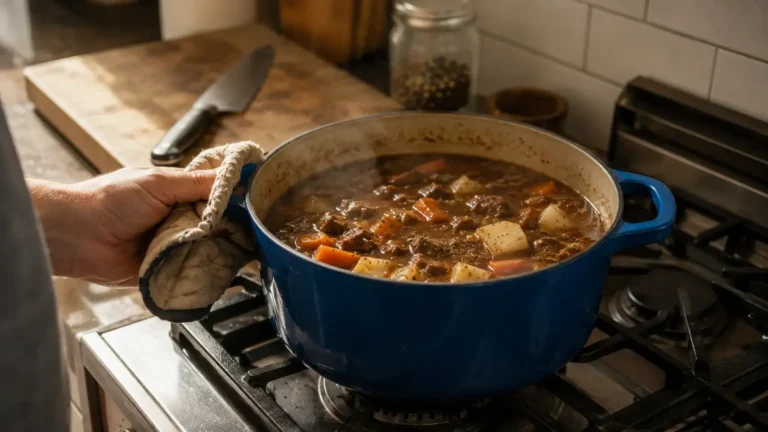
A Dutch oven is a heavy, thick-walled cooking pot with a tight lid. Most modern home kitchens use an enameled cast iron version. They are short, wide, and heavy enough to use as a small weight for a workout.

The secret to this pot is thick iron construction. Iron is a dense material. It takes a long time to heat up compared to thin steel. But once it gets hot, it stays hot. It holds onto that heat and distributes it evenly across the bottom and up the sides.
The heavy lid is just as vital. It seals in moisture so steam cannot escape easily. This makes it perfect for long, slow braises where you want tough meats to become tender over several hours.
If you want to understand the base materials of these heavy pots, you can look into the technical definitions of cast iron metallurgy on Wikipedia [opens in new tab] to see why iron retains heat so well.
What is a Stockpot?
A stockpot is a tall, thin-walled pot with a lightweight lid. It is designed to hold a large volume of liquid and heat it up as fast as possible. Most are made of stainless steel or aluminum.
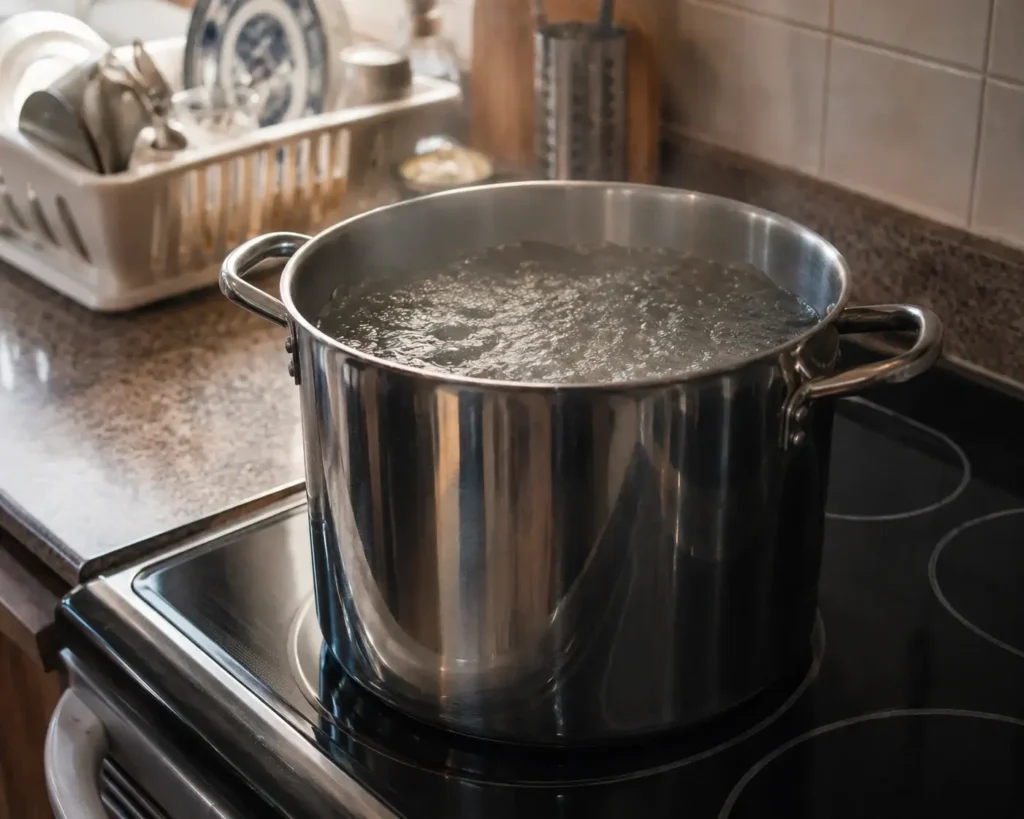
Because the walls are thin, a stockpot reacts to temperature changes quickly. Turn the burner to high, and the water starts moving. Turn it off, and it cools down fast. The tall, narrow shape minimizes evaporation. This is exactly what you want when you are boiling water for pasta or simmering bones for hours to extract collagen for a soup base.
The thin bottom means heat stays concentrated right over the burner. If you try to cook something thick or starchy in it without stirring constantly, the food at the bottom will catch and burn. It is a tool built for liquids, not for dry heat or thick sauces.
The Core Differences: Head-to-Head Comparison
To see how these two tools stack up when you look at the raw specs, let us put them side by side.

| Feature | Dutch Oven | Stockpot |
| Primary Material | Enameled or raw cast iron | Stainless steel or aluminum |
| Wall Thickness | Very thick (usually 4mm to 5mm) | Thin (usually 1mm to 2mm) |
| Shape | Short, wide, large floor area | Tall, narrow, smaller floor area |
| Heat Retention | Excellent (stays hot for a long time) | Poor (cools down very fast) |
| Weight | Very heavy (10 to 14 pounds empty) | Light (3 to 6 pounds empty) |
| Oven Safety | Excellent (safe up to 500°F) | Limited (lids or handles may have plastic) |
| Best Used For | Braising, baking bread, thick stews | Boiling pasta, clear stocks, large soups |
Heat Retention vs. Fast Boiling
The way these pots handle heat changes how your food cooks. This is where my practical research showed me why you cannot just swap one for the other without changing your cooking style.
The Physics of Thick Iron
A Dutch oven acts like a heat battery. When you place it on a burner, the iron absorbs energy slowly. Because the metal is thick, it spreads that energy out. You will not get hot spots directly over the flame.
This even heat profile is why it excels at searing meat. When you drop a cold piece of beef into a hot Dutch oven, the surface temperature of the pan does not plummet. It keeps searing, creating a deep brown crust that adds massive flavor to stews.
The Speed of Thin Steel
A stockpot is an express train. It does not store heat; it transfers it directly into whatever liquid is inside. If you want to boil five quarts of water for a weeknight pasta dinner, the stockpot will win every single time.
Using a Dutch oven just to boil pasta water is a waste of time and energy. You have to wait for the heavy iron to heat up before the water even gets a chance to absorb that heat.
To see these thermal differences in action, you can check out this helpful breakdown of pan materials:
[YOUTUBE EMBED: “The Science of Cookware Materials Explained” — Ethan Chlebowski — Why this video adds value here]
Cooking Shapes: Wide and Short vs. Tall and Narrow
The physical footprint of the pot alters how moisture behaves during the cooking process.
Why Wide Floors Matter
A standard 6-quart Dutch oven has a wide bottom. This gives you plenty of surface area to brown meat or soften diced onions without crowding them. Crowded food releases moisture and steams instead of browning.
The shorter walls also allow steam to escape easily when you want to reduce a sauce down to a thick, rich consistency.
Why Tall Walls Matter
A stockpot goes vertical. A 12-quart stockpot takes up the same burner space as a Dutch oven but holds twice the volume. The tall, narrow columns of liquid mean less surface area is exposed to the air.
This design keeps evaporation low. When making chicken stock over four hours, you want the liquid to stay in the pot, not vanish into your kitchen air.
To ensure your home stock setups meet proper food safety profiles when handling large volumes of liquids, you can review the USDA guidelines on cooling down large pots of soup safely [opens in new tab] to prevent bacteria growth.
When to Use a Dutch Oven
There are specific jobs where the Dutch oven cannot be replaced by a thin metal pot. If you try, you will end up with a burned mess or a sad, flavorless dinner.
Long, Slow Braises
Think of pot roast, short ribs, or carnitas. These dishes require you to sear the meat first, add a small amount of liquid, cover the pot, and cook it at a low temperature for hours.
The thick walls of the Dutch oven keep the cooking environment steady, even if your stove or oven temperature fluctuates. The heavy lid forces evaporating liquid to condense and drip back down onto the meat, keeping it from drying out.
Baking Artisan Bread
If you love crusty boule bread with a chewy interior, a Dutch oven is mandatory. When you preheat the pot inside a hot oven and drop the dough inside, the tight lid traps the moisture leaving the dough.
This creates a mini steam chamber. The steam keeps the exterior of the dough soft long enough for the bread to rise fully before the crust sets. You cannot get that bakery-style crust in a thin steel pot.
Thick, Starchy Stews and Chilis
My mom made chili in an old, beat-up pot for hours. When I tried to recreate her recipe in a thin stockpot in my first apartment, the beans settled at the bottom and scorched within thirty minutes.
A Dutch oven distributes the heat so gently that thick mixtures can simmer on low heat for hours without sticking and burning, provided you give it an occasional stir.
When to Use a Stockpot
The stockpot is your high-volume workhorse. It handles the utility jobs that keep a kitchen running smoothly.
Boiling Pasta and Grains
Pasta needs a large volume of water to cook correctly without becoming a gummy, sticky clump. A stockpot gives the noodles room to swim.
Because it holds heat well in the volume of water itself, dropping a pound of pasta into a massive stockpot will not stop the boil for long.
Making True Bone Broth and Stock
To get clear, flavorful stock, you need to simmer bones, vegetables, and water for a long time without the liquid dropping below the level of the ingredients.
The tall shape of the stockpot ensures everything stays submerged. It allows you to make large batches that you can freeze for later use.
Canning and Preserving
If you ever want to get into making your own jams or pickling vegetables, you need a water bath canner.
A large stockpot is tall enough to submerge mason jars fully under water with an inch or two of clearance above the lids. A Dutch oven is simply too shallow to handle this safely.
Real Buying Advice: What Should You Look For?
I do not believe in buying gear just because it has thousands of five-star reviews on Amazon. I always filter by the one-star reviews first to see how a product breaks down after a year of real use.

Here is what matters when you are spending your hard-earned money.
Choosing a Dutch Oven
You do not need to spend $400 on a luxury French brand like Le Creuset to get great results. The iron underneath works exactly the same way.
Look for a pot that weighs between 12 and 14 pounds in the 6-quart size. Check the handles; they should be large enough that you can get a firm grip while wearing thick oven mitts.
Derek’s Tip: Make sure the lid knob is made of metal or high-heat resistant composite. Cheap plastic knobs will crack or melt if you try to bake bread at 450°F.
For a reliable entry point that won’t break your budget, the Lodge Enameled Cast Iron Dutch Oven is a stellar option. It offers exceptional heat distribution and heavy construction at a fraction of the cost of premium brands.

If you purchase a raw cast iron model instead of an enameled one, you will need to maintain the protective layer of oil. You can read the official Lodge Cast Iron seasoning and care guide [opens in new tab] to learn how to keep the metal from rusting over time.
Choosing a Stockpot
For a stockpot, material thickness matters less than the design of the base. Look for a pot labeled “tri-ply” or one that has a heavy aluminum disc bonded to the bottom of the stainless steel. This disc helps spread the heat out slightly, reducing the risk of burning your soups.
Avoid paper-thin aluminum pots that dent when you bump them against the sink. They warp easily on modern flat-top stoves, meaning they will not sit flat on the burner.
A great middle-of-the-road choice is the Tramontina Stainless Steel Tri-Ply Base Stockpot. The bonded base gives you better heat management than a single-layer steel pot, making it perfect for big batches of soup or boiling pasta.
Can You Use One for the Other?
If you only have room for one pot right now, you can make compromises. But you have to know the workarounds so you do not ruin your dinner.
Using a Dutch Oven as a Stockpot
You can absolutely use a Dutch oven to make soup, boil a small batch of pasta, or cook potatoes.
The only real limitations are volume and weight. A standard Dutch oven maxes out around 6 or 7 quarts. If you are making a massive batch of vegetable soup for a big family gathering, you will run out of room.
It is also exhausting to lift and drain a heavy iron pot filled with boiling water. Be careful when carrying it over to the sink.
Using a Stockpot as a Dutch Oven
This is much harder to do successfully. If a recipe calls for searing meat and then braising it in the oven, a cheap stockpot will struggle.
First, check if the handles and lid are safe for oven use. Many stockpots use plastic handles that melt.
Second, if you try to braise meat in a thin-walled pot, the liquid will evaporate much faster because the lid does not seal tightly. You will need to check the fluid levels every 30 minutes and add water or broth so the meat does not burn.
To see a direct visual comparison of how these two pots cook identical dishes under test conditions, check out this experiment:
[YOUTUBE EMBED: “Equipment Review: Dutch Ovens vs Stockpots” — America’s Test Kitchen — Why this video adds value here]
Which One Do You Actually Need First?
If you are building your kitchen setup from scratch, you have to prioritize based on your budget and what you actually eat.
- Buy the Dutch Oven first if: You love hearty comfort foods, slow-cooked meats, thick chilis, or baking your own crusty bread. It is a more versatile tool for developing deep, rich flavors. It will change the quality of your cooking more than a stockpot will.
- Buy the Stockpot first if: Your cooking consists mostly of simple weeknight meals like boxed pasta, quick brothy soups, boiled potatoes, or if you cook for a large family of four or more people regularly. It is the practical choice for high-volume utility work.
In my kitchen, my 10-inch cast iron skillet handles the daily frying, and my 6-quart Dutch oven handles everything that needs a lid or a simmer. I only pull out my stockpot when I need to boil a mountain of noodles or clean out the fridge to make a big batch of chicken soup.
Frequently Asked Questions
1. Is an expensive enameled Dutch oven worth the high price tag?
No, you do not need to spend hundreds of dollars. The luxury brands offer beautiful enamel colors and slightly smoother finishes, but in terms of how your food cooks, a budget-friendly option does the exact same job. The weight of the iron and the fit of the lid are what matter, not the logo on the side. Spend the saved money on better ingredients instead.
2. Can I put an enameled Dutch oven inside my oven safely?
Yes, enameled cast iron is built for the oven. Most quality brands are safe up to 500°F. However, you must inspect the knob on the lid before cranked up the heat. If the knob is made of regular plastic rather than stainless steel or a high-heat composite material, it can melt or crack. You can buy replacement metal knobs online if your pot came with a cheap plastic one.
3. Why does food always burn at the bottom of my thin stockpot?
Food burns in a stockpot because the metal at the bottom is thin and transfers heat directly from the burner in concentrated hot spots. If your soup contains starches like rice, potatoes, or flour-thickened broth, those heavy particles sink to the bottom. Without a thick base to spread out the heat, those settled pieces absorb too much thermal energy and scorch. Stir frequently and keep the heat lower than you think you need.
4. Can I use a Dutch oven on a smooth glass cooktop without breaking it?
Yes, but you have to be careful. Enameled cast iron works perfectly on glass and induction stoves because the bottom is flat and magnetic. The danger is physical damage. A 6-quart Dutch oven filled with food can weigh close to twenty pounds. Never drop it onto the glass, and never slide it across the surface, as rough iron edges on the bottom can leave permanent scratches. Lift it cleanly when moving it.
5. Do I need to season an enameled Dutch oven like regular cast iron?
No. The shiny coating on an enameled Dutch oven is actually a layer of smooth glass fired onto the iron. It does not have pores, so it does not need oil or seasoning to stay protected. You just wash it with regular dish soap and warm water. Never use steel wool or abrasive scrubbing pads on the enamel, as you will scratch the surface and cause food to stick more in the future.
6. Can I use a stockpot to deep fry chicken or donuts?
It is not a good idea. Deep frying requires the oil temperature to stay steady when you drop cold food into the pot. A thin stockpot loses heat instantly when food enters, causing the oil temperature to drop. This makes your fried food greasy and soggy instead of crispy. The tall, thin sides also make it awkward to lower food into the hot oil safely. A Dutch oven or a deep cast iron skillet is a much safer and more effective tool for frying.